

 By Singapore Local News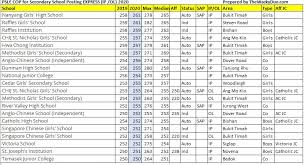
secondary-school-cop-2020 of secondary school cut-off points (COP) in 2020 plays a crucial role in how students transition from primary to secondary education. While many parents and students focus purely on numbers, the reality behind COP is much deeper. It reflects demand, competition, school reputation, and student preferences all combined into a single indicator. To make better decisions, it is important to go beyond rankings and understand how COP actually works in practice.
What Is COP and How It Is Calculated
Cut-Off Point refers to the PSLE score of the last student admitted into a particular secondary school and course. For 2020 admissions, the COP was based on the 2019 PSLE cohort. This means COP is not a fixed requirement but a reflection of competition for that year. If more high-scoring students apply to a school, the COP becomes lower, indicating higher selectivity.
It is important to understand that COP is not a guaranteed entry score. Even if a student meets the COP, admission is not assured because other factors like school choice order and citizenship priority also play a role.
Understanding COP Score Ranges
COP scores are often interpreted in ranges that indicate the level of competition. Schools with very low COP scores are generally considered highly competitive and attract top-performing students. Mid-range COP schools provide balanced opportunities, while higher COP schools offer more accessible entry points.
Students scoring at the top range typically aim for elite schools with strong academic reputations. Those in the middle range have a wide variety of choices and can focus on finding the best fit. Students with higher scores (numerically higher COP) still have many quality options that may better match their interests and strengths.
Why COP Alone Does Not Define School Quality
A common misconception is that a lower COP automatically means a better school. While COP reflects demand, it does not measure teaching quality, student experience, or overall development opportunities. Many schools with slightly higher COPs offer excellent programs, strong leadership, and supportive environments.
School culture, teaching style, co-curricular activities, and student well-being support are equally important. A school that matches a student’s personality and learning style often leads to better outcomes than simply choosing based on ranking.
Different School Types and Their Impact on COP
Secondary schools are not all the same. Some offer Integrated Programme (IP), which allows students to skip O-Levels and proceed directly to A-Levels or equivalent qualifications. These schools often have lower COPs due to higher demand.
Special Assistance Plan (SAP) schools focus on bilingual education and cultural values, which also attract specific groups of students. There are also independent and specialized schools that offer unique programs, contributing to varying COP levels.
Understanding these categories helps students choose schools based on goals rather than just scores.
How Competition Influences COP Each Year
COP changes every year depending on student preferences. If a particular school becomes more popular, its COP will drop. On the other hand, if fewer high-scoring students apply, the COP may rise.
This means COP is not a stable benchmark. It is influenced by trends, reputation changes, and even word-of-mouth among parents and students. Therefore, relying solely on previous year COP can be misleading if not combined with strategic thinking.
Smart Strategy for Choosing Schools
One of the most effective approaches is to divide school choices into three categories: dream schools, target schools, and safety schools. Dream schools are those slightly below a student’s score range, where admission is possible but not guaranteed. Target schools match the student’s score closely and offer a high probability of acceptance. Safety schools have higher COPs, ensuring a strong chance of placement.
Balancing these choices increases the likelihood of securing a suitable school while still aiming high.
Understanding the Role of Choice Order
The order in which schools are listed during selection is extremely important. If a student qualifies for multiple schools, the system will prioritize the highest-ranked choice. This means placing schools in the correct order can significantly impact final placement.
Even if a student meets the COP for several schools, poor ranking strategy can result in missing out on better options.
Hidden Factors That Affect Admission
Beyond COP, several hidden factors influence admission outcomes. Citizenship status can affect priority, with local students often given preference. Distance from the school may also play a role in tie-breaking situations.
Additionally, specific programs or affiliations may give certain students an advantage. Understanding these factors helps in making more realistic decisions.
How to Interpret Small Differences in COP
A difference of one or two points in COP might seem small but can represent a significant shift in competition. Many students cluster within narrow score ranges, so even slight differences can determine admission outcomes.
Instead of focusing only on exact numbers, it is better to consider ranges and probabilities when evaluating school options.
Trends and Patterns in Secondary School COP
Over time, some schools consistently maintain low COPs, indicating stable demand and strong reputation. Others may fluctuate depending on changes in leadership, programs, or public perception.
Identifying stable schools versus trending schools can provide insights into long-term reliability. Stable schools are often safer choices, while trending schools may offer new opportunities but with less predictability.
Comparing Schools Beyond Academics
Academic performance is important, but it should not be the only factor. Schools differ in extracurricular offerings, facilities, teaching styles, and overall environment. Some schools excel in sports, while others focus on arts or leadership development.
Students should consider their interests and strengths when choosing a school. A supportive environment can significantly enhance both academic and personal growth.
Common Mistakes Students and Parents Make
One of the biggest mistakes is focusing only on the lowest COP schools without considering fit. Another common error is ignoring safety options, which can lead to unexpected outcomes.
Some also misunderstand COP as a fixed requirement rather than a reflection of past admissions. This can lead to unrealistic expectations and poor decision-making.
How to Use COP Data Effectively
COP should be used as a guideline rather than a rule. It helps in shortlisting schools but should be combined with other factors like location, programs, and personal preferences.
Creating a balanced list of schools based on both data and individual needs leads to better outcomes.
Importance of Personal Fit and Long-Term Goals
Choosing a secondary school is not just about immediate admission but also long-term development. Students should consider their future goals, whether academic, professional, or personal.
A school that aligns with these goals will provide better opportunities and a more fulfilling experience.
Advanced Insight Into School Selection
High-performing schools often attract similar types of students, creating a competitive environment. While this can be motivating, it may also increase pressure.
On the other hand, schools with a more diverse student base may offer a balanced experience with opportunities for leadership and personal growth. Understanding these dynamics helps in making more informed choices.
How to Reduce Stress During the Selection Process
The process of choosing a secondary school can be stressful for both students and parents. Having a clear strategy and realistic expectations can significantly reduce anxiety.
Focusing on finding the right fit rather than chasing rankings leads to more confident and satisfying decisions.
Final Thoughts on Secondary School COP 2020
Secondary school COP 2020 is a useful tool for understanding admission trends, but it should not be the only factor in decision-making. By combining COP data with strategic planning, personal preferences, and long-term goals, students can make smarter and more confident choices.
The key is to move beyond numbers and focus on what truly matters: finding a school that supports growth, learning, and future success.
 Global Arena