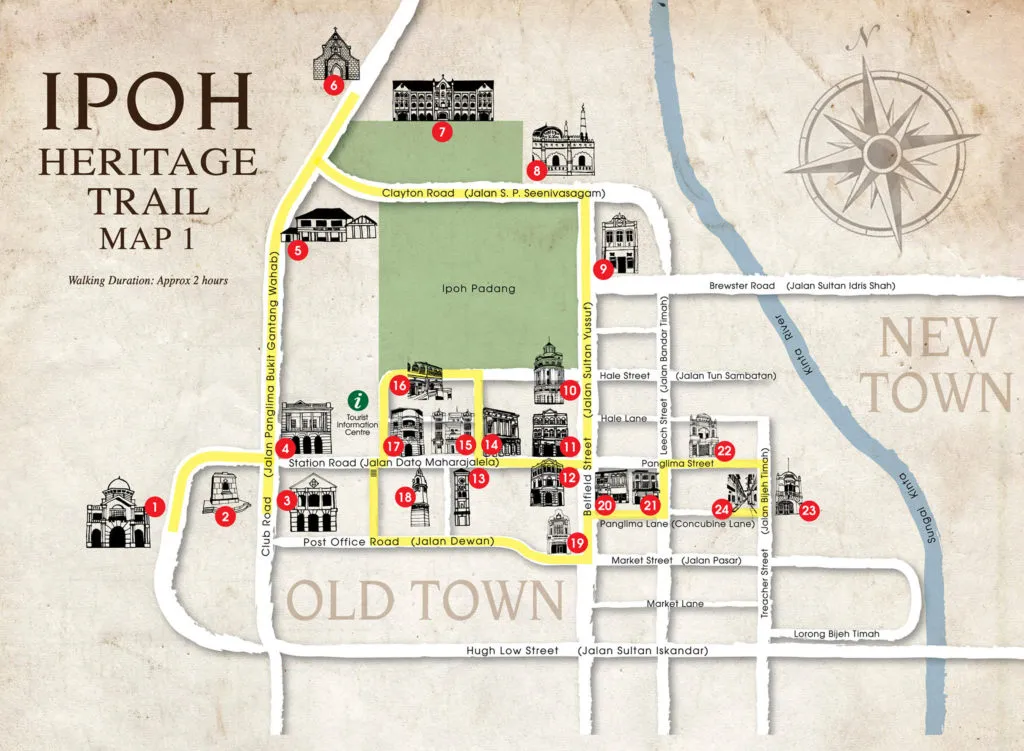
Ipoh Heritage Trail is one of Malaysia’s most fascinating heritage walks, blending colonial architecture, local history, street art, and modern culture into one unforgettable route.
If you want to explore Ipoh beyond the usual tourist spots, this trail is the best way to understand the city’s true identity. This guide will walk you through every step, offering advanced details, hidden spots, local tips, and complete planning information.
Why the Ipoh Heritage Trail is a Must-Do Experience
The Ipoh Heritage Trail is not just a walk; it is a journey through time. You will see how the city evolved from a tin-mining powerhouse into a modern cultural hub. The trail includes historic buildings, heritage lanes, and hidden corners that reveal Ipoh’s multicultural roots.
If you want a deep connection to the city, the Ipoh Heritage Trail is the most meaningful way to explore Ipoh.
How to Use This Guide (Advanced Planning Checklist)
Before you start, here is a complete checklist for a smooth and unforgettable experience:
- Choose your route length (2–3 hours, 4–5 hours, or full-day).
- Download a map or save a screenshot offline.
- Wear comfortable shoes (the walk includes uneven pavements).
- Bring water, sunscreen, and a hat (Ipoh can be hot midday).
- Plan food stops (many attractions are near famous cafes).
- Decide your focus (history, photography, food, or architecture).
- Consider a local guide if you want deeper historical insights.
Best Time to Walk the Ipoh Heritage Trail
If you want the most comfortable experience, the best time is:
- Early morning (7:00–9:30 AM): Cool temperature, soft sunlight, fewer crowds.
- Late afternoon (4:00–6:30 PM): Perfect lighting for photography, relaxed atmosphere.
Avoid midday (11:00 AM–3:00 PM) unless you want a hot, tiring walk.
The Complete Ipoh Heritage Trail Route (Most Popular Version)
This is the most commonly followed route that covers the most iconic spots. You can modify it based on your interests.
Starting Point: Ipoh Railway Station
The first stop is the iconic Ipoh Railway Station. It is often called the “Taj Mahal of Ipoh” due to its majestic architecture.
Second Stop: Ipoh Town Hall & Padang
Just a short walk from the railway station, you will see the Ipoh Town Hall and the nearby Padang (field). This area is filled with colonial buildings and local government offices.
Third Stop: Birch Memorial Clock Tower
The Birch Memorial Clock Tower is one of Ipoh’s most famous landmarks. It honors James W. W. Birch, the first British Resident of Perak.
Fourth Stop: Han Chin Pet Soo Museum
Han Chin Pet Soo is a heritage museum that showcases the Hakka tin-mining community. This is one of the most meaningful stops for history lovers.
Fifth Stop: Concubine Lane (Lorong Panglima)
Concubine Lane is one of the most famous lanes in Ipoh. It is full of shops, cafes, souvenirs, and historical buildings.
Sixth Stop: Little India & Jalan Market
This area showcases Ipoh’s multicultural heritage. You will see Indian shops, traditional markets, and vibrant street life.
Seventh Stop: Old Town Murals and Street Art
Ipoh’s street art scene is vibrant and meaningful. The murals tell stories of the city’s heritage, culture, and everyday life.
Eighth Stop: St. Michael’s Institution
St. Michael’s Institution is a historic school with beautiful colonial architecture.
Ninth Stop: Ipoh Old Town Central Market
The market is a busy, authentic place where locals buy daily essentials. It is also a great place to try local food.
Tenth Stop: Kampar Road and Old Shop Houses
The old shop houses reflect the city’s historical trading and economic history.
Advanced Historical Insights You Won’t Find in Most Guides
Most guides only list the stops, but here is deeper information that makes the trail meaningful:
The Tin Mining Era and Its Impact on Ipoh
Ipoh’s wealth was built on tin mining. The city grew rapidly in the late 19th and early 20th centuries. Many of the buildings you see along the trail were built during this era.
Why the Trail Shows Colonial Architecture
The colonial architecture was built during British rule. These buildings were designed for administrative and commercial purposes.
The Hakka Influence
Many of the early tin miners were Hakka Chinese. Their culture and community structures played a major role in shaping Ipoh’s heritage.
The Multicultural Heritage of Ipoh
Ipoh is a mix of Chinese, Malay, Indian, and European influences. The trail shows this diversity through buildings, food, and local businesses.
Top 10 Hidden Gems Along the Ipoh Heritage Trail (Not in Most Guides)
Here are secret spots that serious travelers should not miss:
- Hidden murals in back alleys
- Old heritage houses with intricate carvings
- Secret coffee shops inside old buildings
- Local street food stalls near the market
- Small heritage galleries
- Hidden temples with unique architecture
- Traditional craft shops
- Historic shops with original signage
- Old colonial fountains and statues
- Quiet heritage lanes with minimal crowds
Detailed Stop-by-Stop Guide (With Advanced Tips)
1. Ipoh Railway Station (Start Here)
Why it matters:
This building represents the city’s connection to the British colonial era and the rapid growth of the tin industry.
What to look for:
- The grand entrance
- The intricate ceiling details
- The historic clock tower
Best photo angle:
From the front entrance looking up at the full facade.
Advanced tip:
Visit early in the morning to avoid crowds and get clean shots without people.
2. Ipoh Town Hall & Padang
Why it matters:
This area was the administrative heart of colonial Ipoh.
What to look for:
- Old British-style architecture
- Large open field used for events
- Historic government buildings
Advanced tip:
Look for old plaques and inscriptions on the buildings. They often contain historical dates and information.
3. Birch Memorial Clock Tower
Why it matters:
This is a memorial for the British Resident James W. W. Birch, and it is a key symbol of Ipoh’s colonial past.
What to look for:
- The clock tower’s statues
- The decorative carvings
- The historical plaques
Advanced tip:
Read the inscriptions to understand the political context of that era.
4. Han Chin Pet Soo Museum
Why it matters:
This museum offers deep insights into the Hakka community and the tin mining history.
What to look for:
- Traditional Hakka artifacts
- Tin mining tools
- Community stories
Advanced tip:
Hire a guide inside the museum for detailed stories and insider information.
5. Concubine Lane (Lorong Panglima)
Why it matters:
This lane is a living heritage site with old architecture and modern culture.
What to look for:
- Old buildings and architecture
- Modern cafes and local shops
- Street performances and local culture
Advanced tip:
Visit during late afternoon when the lane is lively and the light is perfect for photos.
6. Little India & Jalan Market
Why it matters:
This area shows the multicultural heritage of Ipoh.
What to look for:
- Traditional Indian shops
- Colorful fabrics and spices
- Local market life
Advanced tip:
Try local Indian snacks and sweets for a real cultural experience.
7. Street Art & Murals
Why it matters:
Ipoh’s murals are modern art that reflects heritage stories.
What to look for:
- Murals with historical themes
- Murals depicting local life
- Art with hidden meanings
Advanced tip:
Walk slowly and look for small murals in alleys. Some of the best ones are not on the main road.
8. St. Michael’s Institution
Why it matters:
A historic school with colonial architecture and deep cultural influence.
What to look for:
- Old school buildings
- Colonial design details
- Historic plaques
Advanced tip:
Visit during weekdays when the school is active to feel the living heritage.
9. Ipoh Old Town Central Market
Why it matters:
The market shows the authentic daily life of Ipoh residents.
What to look for:
- Local food stalls
- Traditional market goods
- Old shop houses
Advanced tip:
Try local breakfast dishes like nasi lemak and curry mee.
10. Kampar Road and Old Shop Houses
Why it matters:
This area shows how Ipoh’s economy and trade evolved.
What to look for:
- Old shop houses
- Original signage
- Traditional businesses
Advanced tip:
Look for signs written in old Chinese script. These are rare and valuable heritage elements.
Best Itineraries for Different Travelers
A. 2–3 Hour Quick Walk (Best for First-Time Visitors)
- Start at Ipoh Railway Station
- Visit Town Hall & Padang
- See Birch Memorial Clock Tower
- Walk through Concubine Lane
- Explore the street art area
- End at Han Chin Pet Soo Museum
B. 4–5 Hour Full Experience (Best for History Lovers)
- Start at Ipoh Railway Station
- Explore Town Hall & Padang
- Visit Birch Memorial Clock Tower
- Spend time at Han Chin Pet Soo Museum
- Walk through Little India & Market
- Explore street art
- End with a local food stop
C. Full-Day Immersion (Best for Cultural Exploration)
- Start early at Ipoh Railway Station
- Visit museums and heritage buildings
- Enjoy lunch at a heritage café
- Explore hidden lanes and murals
- Visit local temples and cultural sites
- End with dinner at a traditional restaurant
Best Food Stops Near the Ipoh Heritage Trail
Food is a major part of Ipoh’s heritage. Here are the best stops:
1. Famous White Coffee Cafes
Ipoh is famous for its white coffee. You will find many heritage-style cafes along the trail.
2. Local Street Food Stalls
Try:
- Nasi Lemak
- Curry Mee
- Ipoh Hor Fun
- Chee Cheong Fun
3. Heritage Cafes Inside Old Buildings
Many cafes are built inside heritage buildings. These cafes give a historic atmosphere while serving modern food.
Photography Guide for the Ipoh Heritage Trail
If you want the best photos, here are advanced tips:
- Use morning light for building facades
- Use late afternoon for warm tones
- Bring a wide-angle lens for buildings
- Look for reflections in puddles
- Capture details like signage and door carvings
Safety and Comfort Tips for the Trail
- Wear breathable clothing
- Carry water and snacks
- Use sunscreen and a hat
- Take breaks in shaded areas
- Avoid walking during heavy rain
How to Make the Most of the Ipoh Heritage Trail (Advanced Strategy)
If you want to get the best experience, follow this strategy:
Step 1: Choose a Focus
Pick one theme:
- Architecture
- History
- Food
- Photography
Step 2: Plan Your Route
Make a route based on your focus. For example, if you want architecture, focus on colonial buildings.
Step 3: Take Notes and Photos
Take notes about what you see. This makes the experience more meaningful and memorable.
Common Mistakes to Avoid on the Ipoh Heritage Trail
- Starting too late in the day
- Wearing uncomfortable shoes
- Not carrying water
- Ignoring the side lanes
- Skipping museums
How to Explore the Ipoh Heritage Trail Like a Local
- Talk to shop owners about the history of the building
- Visit small cafes and ask about old stories
- Explore side lanes instead of only main roads
- Attend cultural events if available
Summary: Why This Trail Is a Must-Do
The Ipoh Heritage Trail is not only a tourist route; it is a living history experience. It connects you to the city’s past, culture, and modern life. This guide gives you a complete and advanced way to explore the trail, with hidden gems, deep historical context, and practical tips.
If you follow this guide, you will experience the Ipoh Heritage Trail like a true insider and make unforgettable memories.