The Additional Wage (AW) Ceiling is a key concept in Singapore payroll and CPF contributions. It defines the maximum amount of additional wages, such as bonuses or commissions, that are considered for CPF contribution purposes in a given year. Understanding the AW Ceiling is essential for employers to ensure compliance with CPF regulations and for employees to know how their total contributions are calculated.
Importance of the Additional Wage Ceiling
The AW Ceiling ensures that contributions to the CPF system are calculated fairly, without exceeding statutory limits. Employers must adhere to this ceiling to avoid overpayment or underpayment of CPF contributions, which can lead to penalties or administrative complications. For employees, it provides transparency in how bonuses and other additional wages impact their CPF contributions.
How the Additional Wage Ceiling Works
The AW Ceiling applies annually and covers all types of additional wages, including:
- Annual bonuses
- Commissions
- Performance incentives
- Allowances tied to productivity
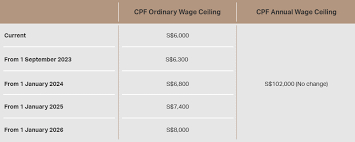
The ceiling is set by the government and updated periodically. Contributions above the ceiling are not required to be made to CPF, protecting both employees and employers from exceeding statutory limits.
Formula for Calculating the Ceiling
To calculate the Additional Wage Ceiling for an employee, the following approach is used:
- Determine the employee’s Ordinary Wage (OW) for the year.
- Apply the AW Ceiling rate set by the CPF Board.
- Subtract any previous CPF contributions made for additional wages in the same year.
This ensures that the total contributions remain within the allowed limits while including all qualifying additional wages.
Step-by-Step Calculation Example
Consider an employee with an Ordinary Wage of $50,000 annually. The AW Ceiling is capped at 17,000 SGD for additional wages. If the employee receives a $10,000 bonus mid-year, the CPF contribution is calculated as follows:
- Verify the total additional wages for the year.
- Confirm that the bonus does not exceed the AW Ceiling after accounting for any previous contributions.
- Apply the CPF contribution rate for the additional wage portion.
This systematic approach prevents errors and ensures compliance with statutory requirements.
Differences Between Ordinary Wages and Additional Wages
It is crucial to distinguish between Ordinary Wages and Additional Wages. Ordinary Wages include fixed monthly salary, allowances, and regular payments. Additional Wages cover irregular or variable payments, primarily bonuses and commissions.
- Ordinary Wages: Monthly salary, fixed allowances
- Additional Wages: Performance bonuses, commissions, incentives
By understanding the difference, employers can correctly categorize wages and ensure CPF contributions are calculated accurately.
Common Scenarios in Applying the AW Ceiling
Several scenarios can affect how the AW Ceiling is applied:
- Full-year employees: Their bonuses are calculated against the full-year AW Ceiling.
- Part-year joiners: AW Ceiling is prorated based on months worked.
- Employees who resign mid-year: Contributions are adjusted for the period of employment.
Providing clear examples for each scenario helps payroll professionals and employees understand the implications of additional wage payments.
Key Compliance Considerations
Employers must ensure compliance by following these guidelines:
- Keep accurate records of all additional wages paid to each employee.
- Monitor total CPF contributions to ensure they do not exceed the AW Ceiling.
- Adjust payroll systems to account for variable payments such as bonuses and commissions.
- Educate HR staff on how the ceiling affects employee contributions.
Non-compliance can result in penalties, back payments, or disputes with employees, making adherence critical.
Tools and Resources for Accurate Calculation
Several tools can aid in calculating CPF contributions considering the AW Ceiling:
- Payroll software: Many payroll systems have built-in calculators for CPF contributions.
- Spreadsheets: Custom formulas can be used to track Ordinary and Additional Wages.
- Interactive calculators: Online CPF calculators can simulate contributions based on different scenarios.
These resources help employers streamline payroll processing and reduce the risk of errors.
Advanced Insights on AW Ceiling
Understanding advanced aspects of the AW Ceiling can provide strategic advantages for businesses:
- Strategic Bonus Planning: By understanding the AW Ceiling, companies can plan bonus distributions to maximize employee benefits without exceeding statutory limits.
- Cashflow Management: Awareness of the ceiling allows better forecasting of CPF contributions and payroll liabilities.
- Employee Communication: Explaining the ceiling and its impact helps manage employee expectations regarding their CPF contributions.
Common Mistakes to Avoid
Employers often make errors that can lead to compliance issues. Common mistakes include:
- Misclassifying wages between Ordinary and Additional Wages.
- Ignoring previous contributions when calculating current additional wages.
- Applying outdated CPF contribution rates.
- Failing to prorate the AW Ceiling for part-year employees.
By avoiding these mistakes, businesses maintain compliance and ensure smooth payroll operations.
Visualizing the AW Ceiling
Though many guides rely solely on text, visual aids can significantly enhance understanding:
- Flowcharts: Illustrate step-by-step calculation processes.
- Tables: Compare Ordinary Wage and Additional Wage contributions.
- Graphs: Show impact of bonuses on CPF contributions across different salary ranges.
These visuals make it easier for HR staff and employees to quickly grasp the concept and calculations.
FAQs About Additional Wage Ceiling
Q: Does the AW Ceiling apply to all employees?
A: Yes, all CPF-contributing employees in Singapore are subject to the AW Ceiling for their additional wages.
Q: Are all types of bonuses included in the calculation?
A: Only qualifying bonuses, commissions, and performance-related incentives count toward the AW Ceiling.
Q: What happens if contributions exceed the ceiling?
A: Employers may need to adjust contributions or request refunds for excess payments from the CPF Board.
Q: Can the ceiling change during the year?
A: AW Ceiling adjustments are announced by CPF periodically, but they typically apply on a calendar-year basis.
Recommendations for Employers
To efficiently manage additional wage contributions under the AW Ceiling:
- Implement robust payroll tracking systems.
- Regularly train HR staff on CPF contribution rules.
- Communicate clearly with employees regarding how bonuses affect CPF contributions.
- Conduct periodic audits to ensure all additional wages are correctly accounted for.
Conclusion
The Additional Wage Ceiling is a fundamental aspect of payroll management and CPF contributions in Singapore. Employers must understand its definition, application, and compliance requirements to maintain accurate payroll and avoid penalties. By using visual aids, advanced calculation tools, and clear communication strategies, businesses can ensure smooth payroll processes while keeping employees informed about their CPF contributions.
Properly managing the AW Ceiling not only ensures compliance but also enhances employee trust, aids in strategic bonus planning, and supports efficient financial management for the company. With careful planning and accurate execution, the AW Ceiling can be navigated with confidence, benefiting both employers and employees alike.