

 By Global Arena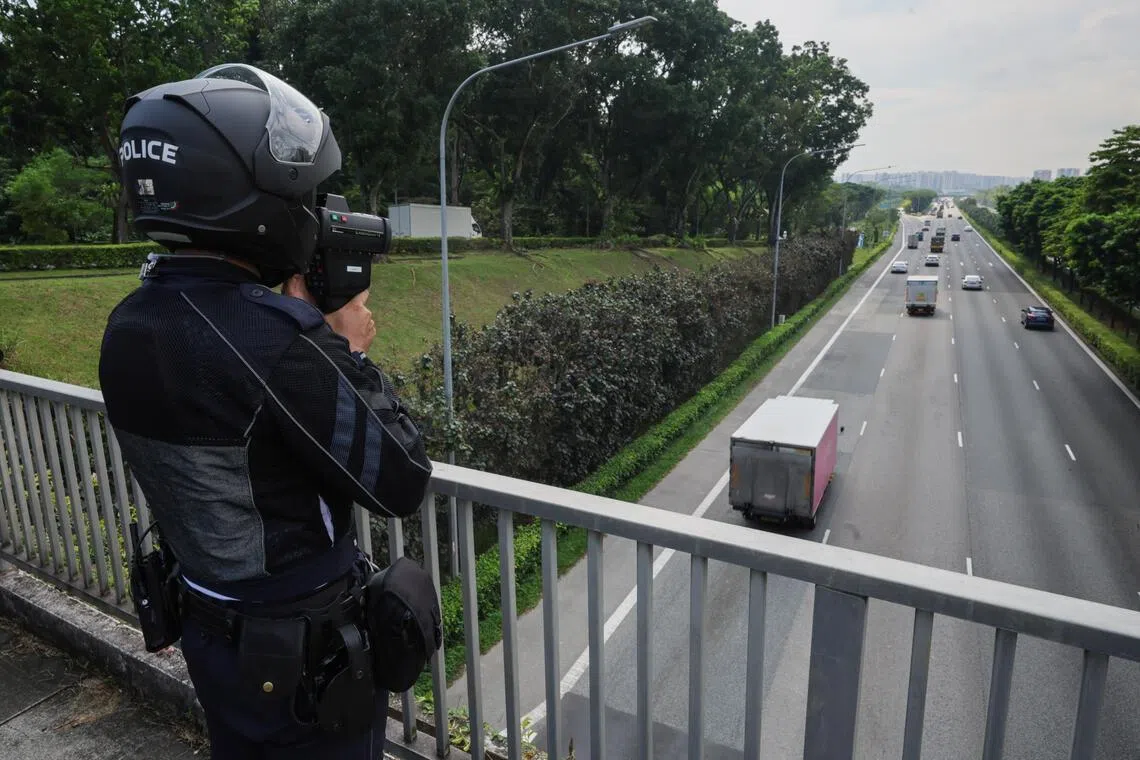
Most Singaporeans have noticed the change without really registering it. The lorries on the AYE seem to move at a steadier pace these days. The express buses heading up to Malaysia don’t push as hard as they once did. The school buses ferrying children across the island maintain a consistent, measured speed that wasn’t always the norm a decade ago. Behind these small but noticeable shifts is a piece of technology that quietly works in the background of nearly every commercial vehicle on Singapore’s roads.
Speed limiter devices have become one of the most important safety tools in Singapore’s transport ecosystem, and yet the average road user knows almost nothing about them. They’re not glamorous. They don’t get featured in vehicle adverts. Drivers rarely talk about them. But they shape the way commercial vehicles move through the city-state every single day, and they have real implications for everyone who shares the road with them.
For local fleet operators, transport companies, and even private bus services, choosing the right singapore speed limiter device regulators recognise has become as standard a decision as choosing tyres or insurance. But for the broader public, the technology and its impact remain largely invisible — which is worth changing, because the safety, traffic, and quality-of-life consequences affect everyone.
What a Speed Limiter Actually Does
The basic concept is simple enough. A speed limiter is a small electronic device installed in commercial vehicles that prevents them from exceeding a pre-set maximum speed, regardless of how hard the driver presses the accelerator. The device connects to the vehicle’s engine management system and intervenes by adjusting fuel delivery as the vehicle approaches its limit.
What this means in practice is that a heavy goods vehicle on the PIE, a tour coach heading toward the Causeway, or a school bus running its morning route physically cannot exceed the legal speed cap for its category. The driver still does everything they normally would — accelerate, brake, change lanes, navigate traffic — but the upper boundary is fixed by the hardware rather than by the driver’s discretion.
The Land Transport Authority sets specific speed limits for different categories of commercial vehicles, and these are typically lower than the limits applying to private cars. Heavy vehicles, buses, and certain commercial categories operate under tighter ceilings, and the speed limiter ensures those ceilings hold consistently.
Why Singapore Has Embraced This Technology
Singapore’s road safety record is among the best in Asia, and that didn’t happen by accident. It’s the product of decades of careful planning, strict enforcement, and a willingness to adopt technologies that other places hesitate over. Speed limiter requirements for commercial vehicles fit naturally into that pattern.
The reasoning is straightforward. Singapore’s roads are dense, urban, and heavily trafficked. The consequences of high-speed commercial vehicle accidents in this environment are particularly severe. A truck or bus losing control at speed near a residential area, a school, or a busy junction can cause damage that spreads far beyond the original incident.
By requiring speed limiters on the vehicles where the consequences of speeding are highest, the regulatory framework reduces the worst-case outcomes without significantly affecting normal traffic flow. Most commercial drivers won’t notice the limiter most of the time. It only becomes relevant in the narrow set of circumstances where a vehicle would otherwise be travelling at clearly unsafe speeds.
The Impact Locals Don’t Always See
For the average Singapore resident, the impact of widespread speed limiter adoption shows up in subtle but meaningful ways. The most obvious is on the expressways, where the visible behaviour of heavy vehicles has shifted noticeably over the past decade. Trucks no longer surge past at speeds that felt unsafe. Buses don’t push aggressively into gaps in traffic the way some used to.
The effect on noise pollution near residential areas is another angle that rarely gets discussed. Vehicles operating at lower top speeds tend to produce less tyre noise, less wind noise, and less drivetrain stress. For HDB blocks near major arterial roads, this contributes to a quieter living environment than would otherwise be possible.
There’s also a knock-on effect on overall traffic flow. When commercial vehicles operate at consistent, predictable speeds, the dynamics of mixed traffic become more stable. Drivers behind them can anticipate their movements better. Lane changes become smoother. The chaotic speed differentials that used to characterise some stretches of expressway have largely disappeared.
The Categories of Vehicles This Affects
Not every commercial vehicle on Singapore’s roads carries a speed limiter, but a significant portion of them do. Understanding which is which helps explain why certain vehicles seem to behave differently in traffic.
Heavy Goods Vehicles
Trucks above specified weight thresholds are required to have working speed limiters. These are the vehicles most often handling port logistics, construction supplies, and inter-warehouse freight. Their consistent operating speeds on expressways are largely the product of these devices.
Buses
School buses, private hire buses, tour coaches, and certain other categories of buses fall under speed limiter requirements. For parents whose children travel on school buses daily, the technology offers a layer of protection that doesn’t depend on individual driver discipline.
Specific Commercial Categories
Certain other categories of commercial vehicles, including some delivery and service vehicles, also operate under speed limiter requirements depending on their classification and weight.
Private cars and most light commercial vans are not required to have speed limiters, which is why a Toyota Vios on the PIE behaves differently from a 20-foot container truck. The difference isn’t just driver behaviour — it’s the underlying hardware setup.
How the Technology Has Improved
The speed limiters being installed in Singapore’s commercial vehicles today are far more sophisticated than the ones available even ten years ago. The basic function — capping top speed — is just the foundation. Modern units integrate with telematics systems and provide a wealth of data that operators use to manage their fleets more effectively.
GPS integration allows for context-aware speed control. A vehicle can have a different speed cap on an expressway than on a residential road, with the limiter automatically adjusting based on its location. This is particularly useful for school buses and delivery vehicles that move through varied environments during their routes.
Continuous data logging means operators can see exactly how their vehicles are being driven. Patterns emerge over time that help identify drivers who might need additional training, routes that might be inherently riskier, or vehicles that might be developing mechanical issues. The limiter has effectively become a diagnostic tool as well as a safety device.
Tamper detection is another important advance. Older systems could sometimes be bypassed by drivers under pressure to make up time. Modern units detect, log, and report any attempt to interfere with their operation, which makes the system far harder to undermine.
The Public Safety Conversation
For Singaporeans concerned about road safety — particularly parents, regular commuters, and residents living near major roads — the widespread adoption of speed limiter technology is genuinely good news. The hardware works in the background to remove a category of risk that would otherwise depend entirely on individual driver judgement and discipline.
That said, no technology is a complete solution. Speed limiters don’t address driver fatigue, distraction, mechanical failures, or the consequences of poor decisions made within the legal speed envelope. They’re one layer of safety, not the whole stack.
What they do offer is a reliable floor. Below that floor, even on a driver’s worst day, the vehicle simply cannot reach the speeds at which the most catastrophic accidents occur. For a country with Singapore’s traffic density, that floor is genuinely valuable.
What’s Coming Next
The next phase of speed control technology in Singapore is likely to bring even tighter integration with smart city infrastructure. Trials of vehicle-to-infrastructure communication are already exploring how vehicles might receive real-time information about traffic conditions, construction zones, or temporary speed restrictions, and adjust their limiters accordingly.
Electric commercial vehicles are also reshaping the picture. Electric trucks and buses have different acceleration and torque characteristics than their diesel counterparts, and speed control systems are evolving to match. The same fundamental concept applies — capping top speed for safety — but the underlying engineering is being rethought for the EV era.
For residents, none of this will be particularly visible in day-to-day life. The vehicles will continue to do what they do, just within tighter and smarter operational boundaries. The benefits will continue to show up indirectly, in the form of safer roads, smoother traffic, and a generally more orderly transport environment.
The Quiet Revolution Worth Noticing
Singapore has a habit of quietly adopting technologies that make daily life better without drawing much attention to them. ERP transformed traffic management. Smart traffic lights have improved flow at junctions across the island. Speed limiter requirements for commercial vehicles belong in the same category — a piece of regulation and technology working together to produce outcomes most people benefit from without ever thinking about.
The next time you’re driving along the BKE behind a steady, well-behaved truck, or watching an express bus head smoothly toward Tuas without aggressive lane changes, there’s a good chance the vehicle has a speed limiter doing its quiet work in the background. It’s one small piece of a larger picture, but it’s a piece worth recognising. The roads we share are safer because of it, even if we rarely stop to think about why.