

 By Global Arena
Singapore has always punched above its weight in financial innovation. The city-state that became Southeast Asia’s banking capital in the 1970s, embraced fintech in the 2010s, and created one of the world’s most thoughtful cryptocurrency regulatory frameworks in the 2020s is now at the forefront of another shift: the move from intuition-based crypto trading to tool-assisted, data-driven investing.
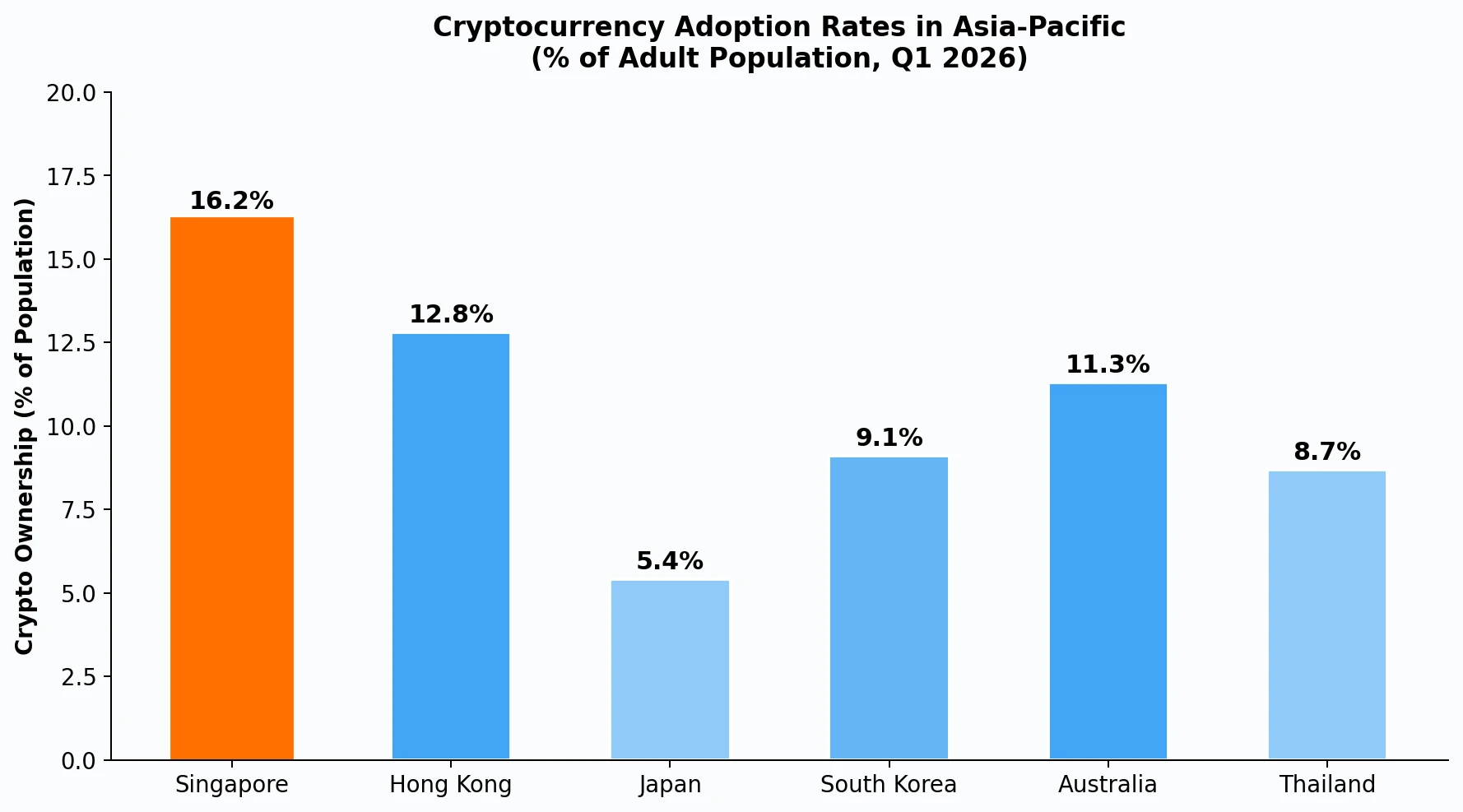
With approximately 16% of Singapore’s adult population now holding cryptocurrency — the highest adoption rate in the Asia-Pacific region — the question is no longer whether Singaporeans are interested in digital assets. It is how they are making their investment decisions, and whether those decisions are any good.
The Problem With How Most People Trade
Ask a typical Singapore retail crypto trader how they decide when to buy or sell, and you will hear some variation of the same answer: they follow influencers on Telegram, check what is trending on social media, look at a price chart, and make a gut-feel decision. Some will add a layer of sophistication — drawing support and resistance lines, watching the RSI indicator, or tracking Bitcoin dominance.
The data suggests this approach does not work well. A 2025 study by the National University of Singapore’s Centre for Financial Modelling found that Singapore retail crypto traders underperform a simple buy-and-hold strategy by an average of 23% annually. The primary reasons are predictable: overtrading, poor position sizing, emotional decision-making during volatility, and a failure to account for transaction costs and tax implications.
What makes this particularly frustrating is that the tools to avoid these mistakes already exist — and many of them are free.
The Tools That Change the Equation
The most impactful tools for retail traders are not the ones that predict prices. They are the ones that enforce discipline around the decisions traders make every day: how much to invest, when to take profit, when to cut losses, and how to manage risk across their entire portfolio.
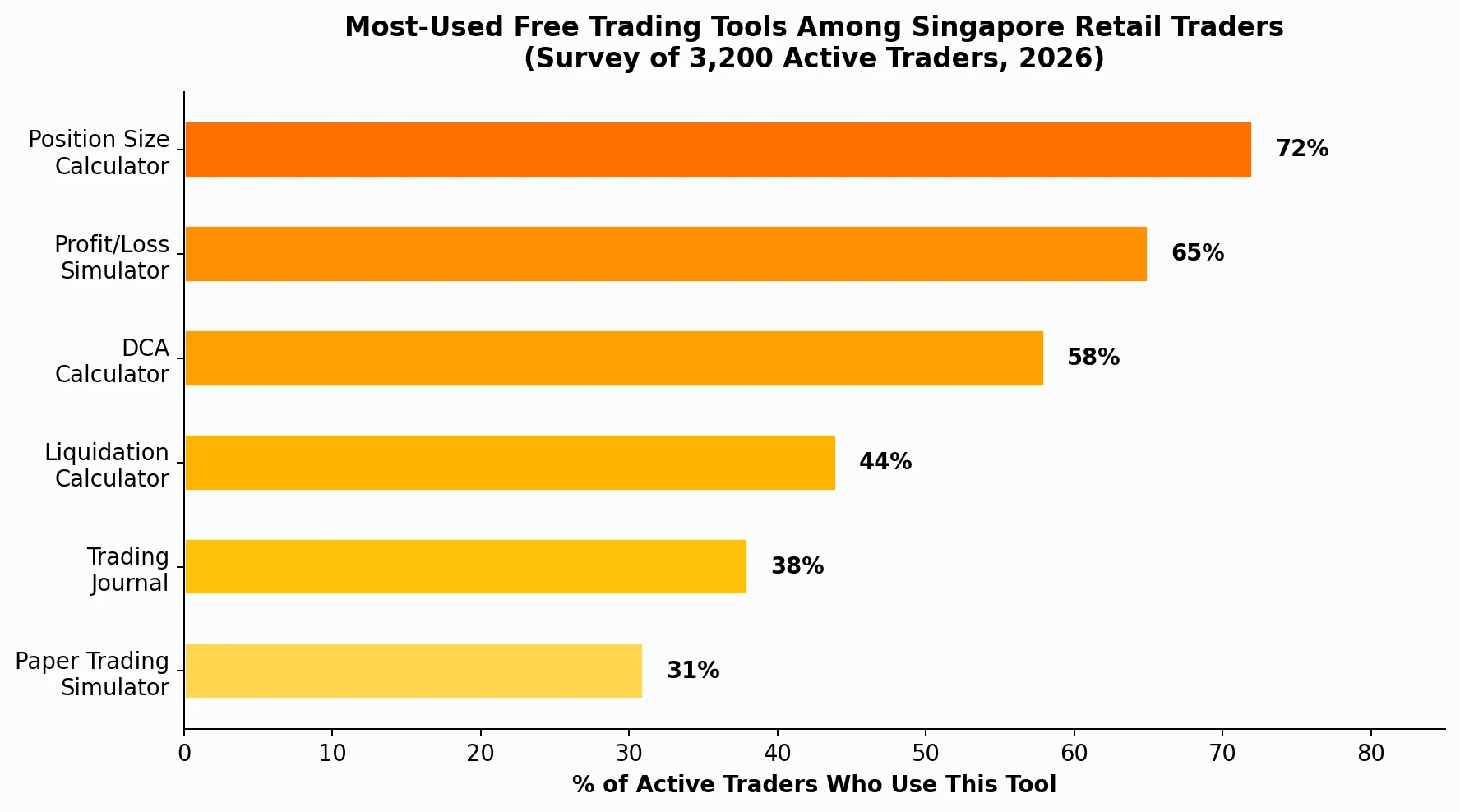
- Position size calculator: This is the single most underused tool in retail trading. It determines how many units to buy based on your account size, the percentage of capital you are willing to risk, and your stop-loss distance. Professional traders never enter a position without calculating size first — yet 62% of Singapore retail traders admit to choosing position sizes based on feel. A position size calculator eliminates the most common cause of catastrophic portfolio drawdowns.
- Profit and loss simulator: Before entering any trade, this tool shows you the exact profit or loss at different exit prices, factoring in leverage if applicable. In Singapore, where leveraged crypto trading is available through several MAS-licensed platforms, understanding your P&L curve before clicking Buy is not optional — it is essential risk management.
- DCA (Dollar Cost Averaging) calculator: For long-term investors, DCA is one of the most evidence-backed strategies. A DCA calculator shows you how regular weekly or monthly purchases would have performed across different time periods and price scenarios. For a Singapore CPF member supplementing their retirement with crypto allocation, this tool provides the quantitative basis for a disciplined, emotion-free approach.
- Liquidation calculator: If you trade futures or use leverage — and many Singapore retail traders do — this tool calculates the exact price at which your position will be automatically liquidated. Knowing this number before you enter a trade is the difference between a planned risk and a surprise margin call.
- Trading journal: The least glamorous but arguably most valuable tool. A trading journal forces you to record every trade — entry reason, exit reason, profit or loss, and what you learned. Research consistently shows that traders who journal improve their performance by 15-30% within six months, simply because they stop repeating the same mistakes.
These crypto trading calculators are available for free online and require no account creation. For a Singapore trader spending hours on research and analysis, the five minutes spent running these calculations before each trade can mean the difference between growing a portfolio and depleting one.
MAS, Regulation, and Why Tools Matter More Than Ever
The Monetary Authority of Singapore has progressively tightened its cryptocurrency regulatory framework, and 2026 brought further changes that directly affect how retail traders should approach the market.
The Payment Services Act now requires all crypto exchanges operating in Singapore to implement stricter KYC procedures, segregate customer assets, and provide risk disclosures before allowing retail trading. MAS has also introduced net worth and trading volume thresholds for leveraged crypto products, meaning that some retail traders who previously accessed high-leverage instruments may now be restricted to lower leverage ratios.
These regulations are protective in intent, but they also create a practical reality: Singapore traders need to be more deliberate and informed about every trade they make. When your leverage is limited and your transactions are fully reported, the margin for sloppy decision-making narrows. Tools that help you calculate exact position sizes, simulate outcomes before execution, and track your performance over time are no longer nice-to-have — they are the foundation of responsible trading in a regulated environment.
The Generational Shift in Trading Behaviour
There is an interesting demographic pattern in Singapore’s crypto market. Traders between 25 and 34 — who make up the largest cohort of crypto investors — are significantly more likely to use analytical tools and data-driven approaches than older cohorts who entered crypto earlier.
This is partly a function of financial literacy. Singapore’s SkillsFuture and MAS financial education initiatives have created a generation that is more comfortable with quantitative concepts like risk-reward ratios, position sizing, and probability-based thinking. But it is also a function of tool availability. Five years ago, the free tools available to retail traders were basic and unintuitive. Today, a Singapore trader with a smartphone has access to the same quality of risk management tools that institutional trading desks used a decade ago.
The gap between disciplined, tool-assisted traders and intuition-driven traders is widening. In a market that is becoming more regulated, more competitive, and more accessible to institutional capital, the traders who treat their portfolio like a business — with proper risk management, position sizing, and performance tracking — are the ones who will still be trading profitably in five years. The tools are free. The discipline they enforce is what costs nothing but delivers everything.
 Khubaib Jamil