

 By Global Arena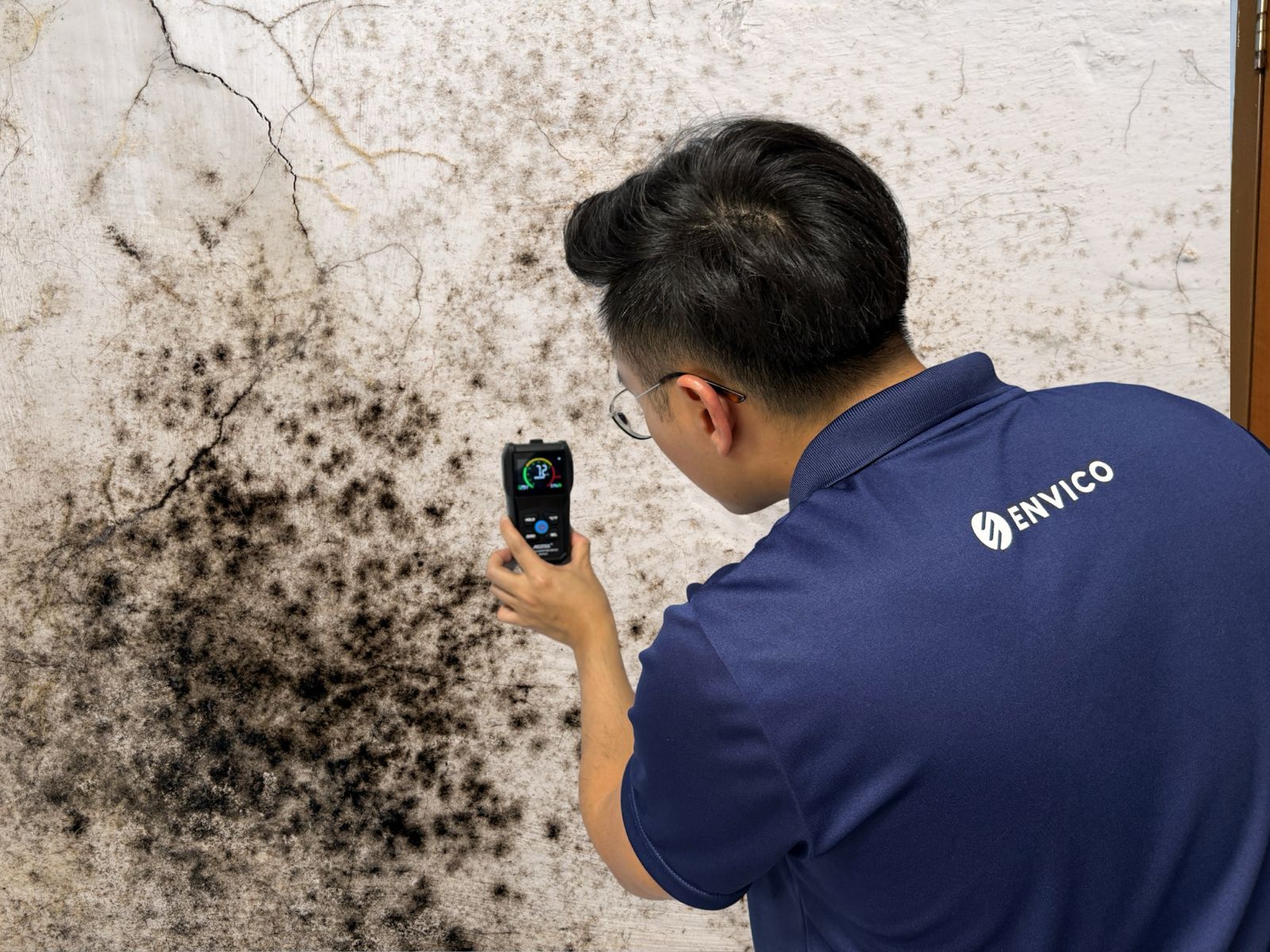
Mould growth on walls and ceilings is one of the most common complaints among homeowners in Singapore. While many attempt to remove mould using household cleaners, experts say that visible mould is often only part of a larger problem.
According to mould remediation specialists at Envico many property owners focus on removing the stains they can see but overlook the underlying conditions that allow mould to thrive.
“Mould growth is often a symptom rather than the root cause,” explains the team. “Simply wiping away visible mould may improve appearances temporarily, but it does not always address the moisture, airborne spores, or environmental conditions that caused the mould to develop in the first place.”
1. Keep Indoor Humidity Under Control
Singapore’s warm and humid climate creates ideal conditions for mould growth.
Experts generally recommend maintaining indoor humidity levels below 60% where possible. This can be achieved through:
- Using dehumidifiers in enclosed spaces
- Repairing water leaks promptly
- Avoiding prolonged moisture build-up
- Drying wet surfaces quickly
Areas such as bedrooms, storerooms, bathrooms, and rooms with poor airflow are often more susceptible to mould contamination.
2. Improve Ventilation Throughout The Property
Poor ventilation is another common contributor to mould growth.
Opening windows regularly, using exhaust fans, and ensuring adequate airflow around furniture can help reduce moisture accumulation. Condensation that forms on walls, ceilings, and windows may also indicate ventilation issues that should be addressed.
3. Don’t Just Remove Visible Mould
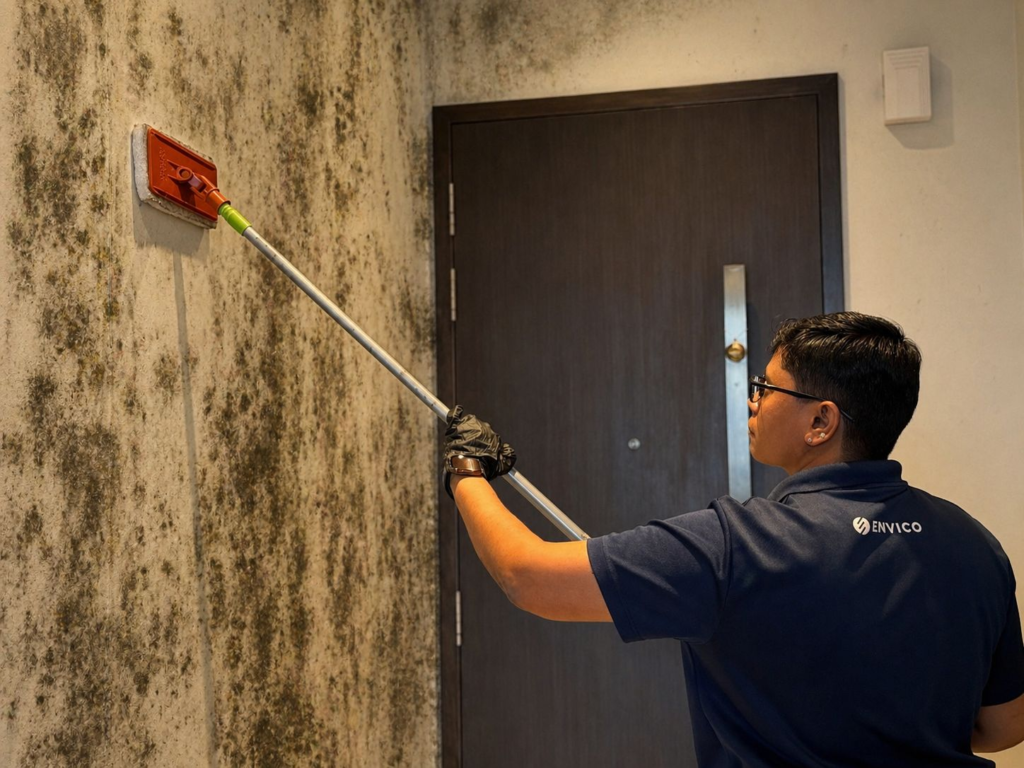
Many homeowners attempt to scrub mould off walls or paint over affected areas.
While this may temporarily improve the appearance of the surface, mould specialists caution that visible mould is only one part of the contamination.
Mould reproduces by releasing microscopic spores into the air. These spores can settle onto surrounding surfaces and remain dormant until environmental conditions become favourable again.
A useful way to think about mould spores is to imagine them as seeds. Even after visible mould has been removed, residual spores may remain in the environment and reactivate when exposed to moisture and humidity.
Why Does Mould Keep Coming Back?
According to mould remediation professionals, recurring mould growth is often caused by one or more of the following:
- Excessive indoor humidity
- Poor ventilation
- Hidden water leaks
- Condensation issues
- Airborne mould spores that were not properly addressed
This explains why some homeowners find themselves repeatedly cleaning the same affected areas without achieving a long-term solution.
Understanding The Difference Between Mould Removal And Mould Remediation
Industry experts note that mould removal and mould remediation are often confused.
Mould removal typically focuses on cleaning visible mould from surfaces.
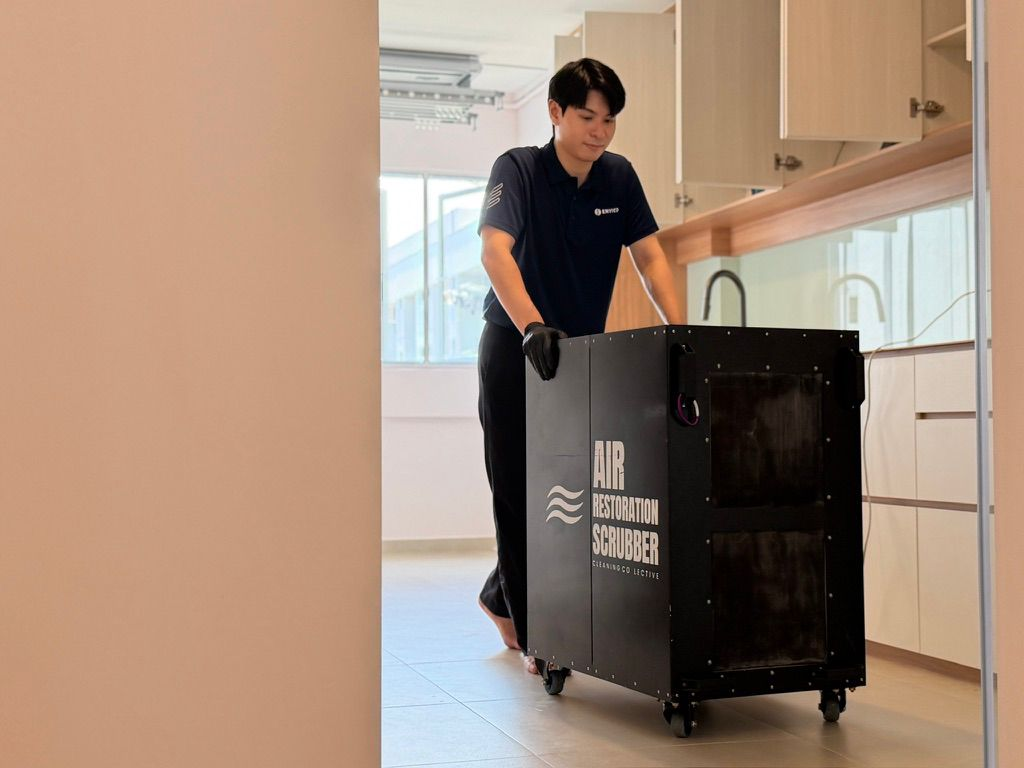
Mould remediation on the other hand, takes a more comprehensive approach by identifying moisture sources, treating contaminated areas, reducing airborne mould spores, and helping to restore healthier indoor environmental conditions.
For severe or recurring mould problems, engaging a professional mould remediation company may help address both the visible contamination and the factors contributing to its return.
More information about professional mould remediation services can be found at: Envico