The Science and Art of Retail Environment Design
Retail store design is one of the most fascinating intersections of psychology, architecture, and business strategy. The way a store is laid out, lit, and furnished influences customer behavior in ways that are both measurable and profound. Customers who feel comfortable and engaged browse longer, spend more, and are more likely to return.
The most successful retailers understand that every element of the physical environment — from the storefront signage to the texture of the floor underfoot — is a communication channel. Expert retail store interior design ensures that each element reinforces the brand’s message and the customer’s sense of welcome.
The Customer Journey Through Your Store
Before any design decisions are made, it is essential to understand the intended customer journey — the path you want customers to take through your store, the products you want them to encounter in what sequence, and the experience you want them to have at each stage.
The decompression zone just inside the entrance, the power walls that merchandise the strongest products, the circulation path that guides customers through the store, and the checkout area that provides opportunity for last-minute impulse purchases — all of these are deliberate elements of retail planning refined through decades of consumer behavior research.
Display Fixtures and Merchandising Systems
Display fixtures are the workhorses of retail design — they hold merchandise, direct attention, and facilitate browsing. The best retail fixtures are designed around the specific products being displayed, enabling customers to see, touch, and understand what is being offered.
Flexibility is an increasingly important design criterion, as merchandise assortments change seasonally. Modular fixture systems that can be reconfigured quickly and without specialist labor offer significant operational advantages.
Lighting: The Single Most Powerful Retail Design Tool
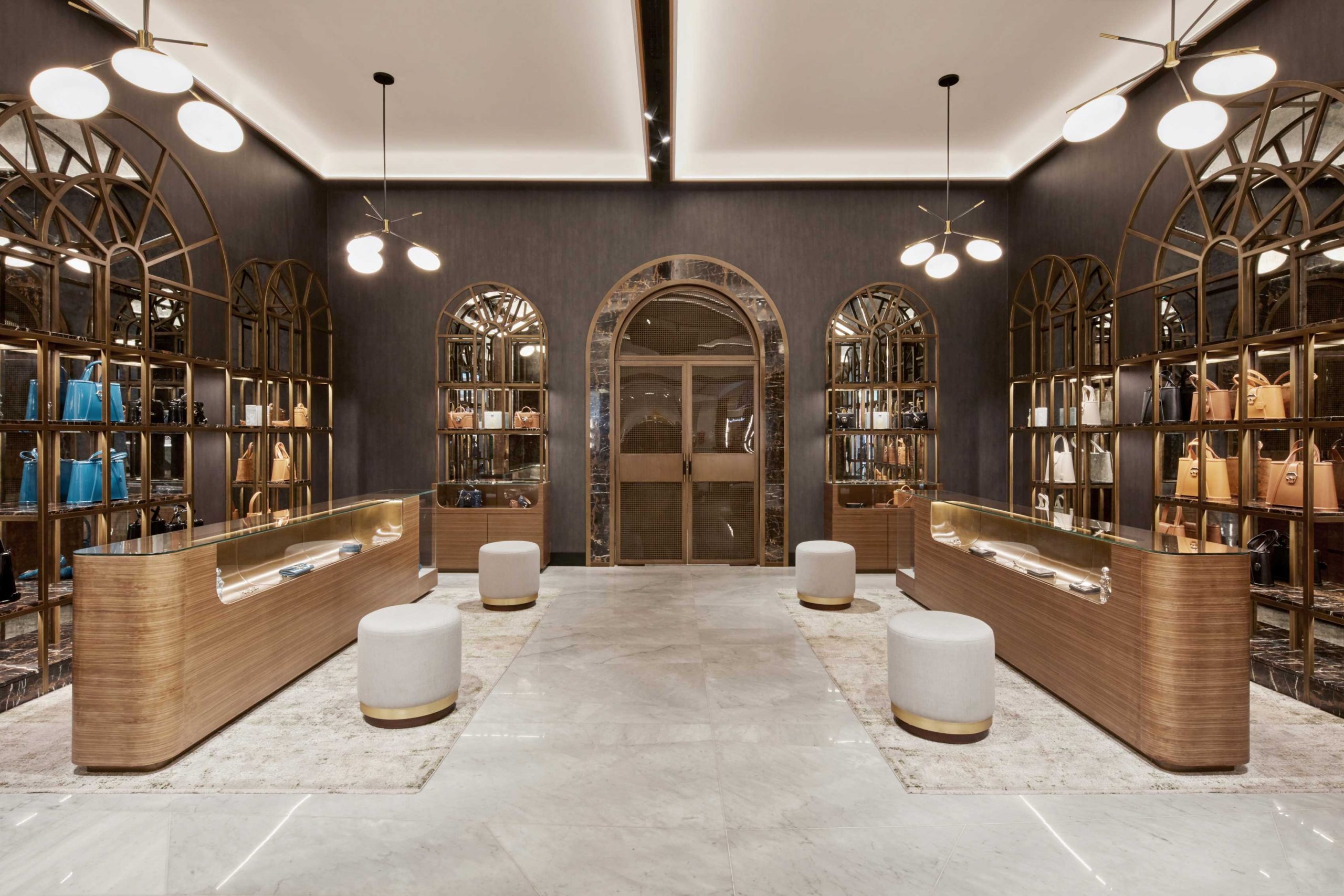
If there is one design element that has a greater impact on retail environment quality than any other, it is lighting. Lighting affects how products appear — their color, texture, and vibrancy. It affects how the space feels — expansive or intimate, energetic or calm. It directs attention and communicates brand values.
Retail lighting design is a specialist discipline. Ambient lighting establishes the overall character of the space. Accent lighting highlights featured products and creates visual points of interest that draw customers through the store. Decorative lighting contributes to brand identity and can become a destination in itself.
Flooring, Walls, and Ceiling: The Background That Sets the Stage
The floor, walls, and ceiling of a retail space serve as the backdrop against which merchandise is displayed. They should complement the brand’s visual identity without competing with it. Dark, rich backgrounds can make luxury goods appear more precious; light, airy backgrounds suit lifestyle and fashion brands.
Flooring choices affect both aesthetics and acoustics. Hard flooring creates energy and formality. Carpet absorbs sound and creates a quieter, more intimate atmosphere appropriate for premium lifestyle and home goods retailers.
Creating Destination Moments
The most memorable retail environments create specific moments — visual vignettes, installation features, or experiential elements — that give customers a reason to pause, engage, and share. These destination moments may be a dramatically lit product display, a bespoke installation that tells the brand’s story, or an interactive element.
In an era when online shopping provides unbeatable convenience, physical retail must offer something that cannot be replicated digitally. Experience, emotion, and the pleasure of discovery are among the most powerful tools physical retailers have.
Building a Retail Space That Performs
The most effective retail environments result from close collaboration between the retailer, the design team, and the construction and fit-out specialists. They are informed by a deep understanding of the target customer, the competitive landscape, and the brand’s strategic positioning.
For inspiration and practical guidance on retail and commercial interior design, the Holzbox Interior Design Blog offers expert perspectives that can help inform better design decisions and create spaces that perform at the highest level.