

 By Global Arena
What Is a Motor Capacitor?
A motor capacitor is among the major electrical components of an electric motor, which, when induced with the energy of electric current, will provide a phase shift to the windings of the motor. Phase shifting will then create a rotating magnetic field responsible for ensuring the effective rotation of the electric motor.
Signs of a Faulty Capacitor
When a capacitor begins to fail, its malfunction can be detected, and timely upkeep becomes feasible. Common signs include:
- The motor fails to start or runs slowly
- Humming or buzzing sounds from the motor
- Intermittent motor operation
- Overheating of the motor
- A burning smell coming from the motor
Analog Meter Testing Method
Using an analog meter for testing
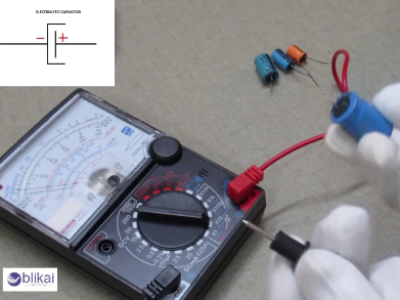
An analog meter, or a Moving Coil Meter, can be a testing instrument for motor capacitors. First, set the meter to its highest resistance range. Light pressure is to be made on the connection of the meter probes to the terminals of the capacitor, this time following the correct polarity. The red probe should touch the positive terminal of the capacitor; the black probe should touch the negative terminal.
Reading the needle movement
When you connect the probes, observe the needle’s movement on the meter’s display. In a healthy capacitor, the reading will show a quick swing of the needle to zero and then ultimately toward infinity. This reflects the capacitor charging and discharging via the meter’s internal circuitry.
Understanding the results
The needle’s movement provides valuable information about the capacitor’s condition. A quick initial deflection followed by a slow return indicates a suitable capacitor. No movement indicates an open circuit, which is likely a capacitor fault. If the needle does move to zero but remains there, it means a short circuit, indicating capacitor failure. Remember that the different capacitor types may have slightly different behaviors, so you must be familiar with the particular motor capacitor you are testing for accurate interpretation.
Capacitor-Discharge Test
Safely discharging the capacitor
It’s crucial to ensure your safety before conducting a discharge test. Start by unplugging the motor and removing the capacitor. Using insulated pliers, carefully connect a 20,000-ohm resistor across the capacitor terminals. This resistor acts as a safe pathway for the stored energy to dissipate. Allow a few minutes for the capacitor to discharge fully.
Observing discharge time
After ensuring the capacitor is adequately discharged, evaluate its performance. Recharge the capacitor for a short time by attaching it to a charger. Then, it is put in the DC voltage mode on the multimeter to measure the voltage across the capacitor terminals. Take down the first voltage reading, start the timer, and see how long it takes for the voltage to drop down to half its original value.
Evaluating capacitor health
The discharge time provides valuable insights into the capacitor’s condition. A healthy capacitor should maintain its charge for a considerable period. If the voltage drops rapidly, it indicates a failing capacitor. Compare the observed discharge time with the manufacturer’s specifications or industry standards for your specific capacitor type. A significantly shorter discharge time suggests that the capacitor may need replacement.
Installation and Maintenance
Proper installation techniques
The installation of a motor capacitor requires adherence to the manufacturer’s official instructions. Start by disconnecting all power and completely discharging the capacitor. Mount the capacitor carefully in clean and secure places away from heat sources and moving parts. Use appropriate connectors and insulation to connect the wires following the motor’s wiring diagram. Check that every connection is safely done before you turn on the system.
Safety precautions
The rule to follow when working with self-keys that are fitted with motor capacitors is that “safety comes first.” Hence, usage of insulated gloves and insulated tools with a handle is a must. Do not touch the terminal of a capacitor unless it has first been discharged with a resistor or a discharge tool. The working area should remain clean, dry, and adequately ventilated to decrease the threat of electrical hazards.
 Khubaib Jamil