

 By Global Arena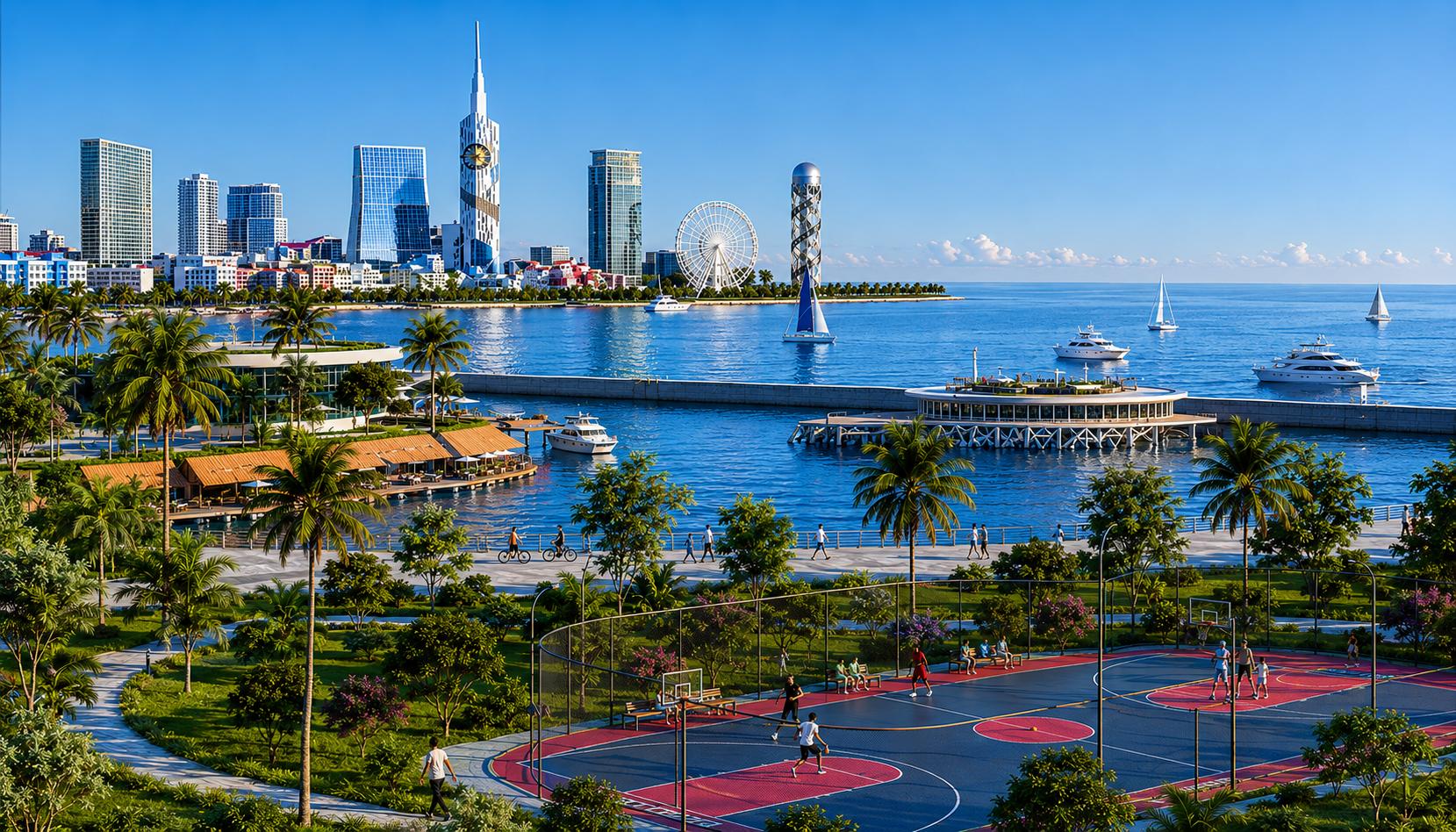
Modern seaside developments are no longer created solely as places to live. Increasingly, they are designed as fully integrated urban environments where architecture, infrastructure, sustainability, and public spaces are combined into a unified system of everyday life.
This is why the overall approach to developing resort cities has been changing in recent years. The focus is shifting beyond residential buildings toward the quality of urban environments, ease of mobility, public spaces, and the balance between work, leisure, and everyday living.
One of the projects being developed with this philosophy is Ambassadori Island in Batumi — Georgia’s first artificial island featuring a modern infrastructure and urban planning concept.
Why Modern Developments Are Designed Differently Today
Modern urban environments are gradually evolving. While the primary focus in the past was often placed on dense construction and automobile infrastructure, today the priorities are increasingly centered around:
- public spaces;
- walkability;
- sustainable mobility;
- parks and recreational zones;
- mixed-use infrastructure;
- everyday comfort and quality of life.
In many modern developments, residents can live, work, relax, and spend their free time within a single location without constantly needing to travel across the city.
This is why modern districts are increasingly designed as complete urban ecosystems rather than simply residential complexes.
What Defines a Modern Urban Environment
| Element | Purpose |
|---|---|
| Sustainable transportation | Reduces pressure on the urban environment |
| Water taxis | Alternative waterfront mobility |
| Public spaces | Creates a more comfortable daily environment |
| Parks and promenades | Improves quality of life |
| Mixed-use infrastructure | Allows residents to live, work, and relax within one district |
| Bicycle routes | Convenient and modern transportation |
| Recreational zones | Balance between city life and leisure |
This approach is gradually becoming the new standard for modern waterfront developments and large resort districts.
Why Public Spaces Are Becoming More Important
In many cities around the world, public spaces are increasingly becoming one of the key factors defining urban quality of life.
Promenades, walking zones, parks, sports areas, and leisure spaces shape not only the appearance of a district, but also the everyday lifestyle of its residents.
This is why modern projects place growing emphasis not only on real estate itself, but also on creating a comfortable environment around:
- walking routes;
- public spaces;
- restaurants and cafés;
- sports infrastructure;
- waterfront leisure zones.
This approach is especially important for resort cities, where the quality of the urban environment directly impacts tourism appeal and buyer interest in real estate.
How This Concept Is Implemented at Ambassadori Island
Ambassadori Group positions Ambassadori Island not simply as a waterfront real estate project, but as a modern district with its own infrastructure and environmentally conscious urban concept.
The project includes:
- an artificial island consisting of two peninsulas;
- 84 hectares of territory;
- 49% dedicated to parks, infrastructure, and recreational zones;
- promenades and waterfront walking areas;
- a yacht club and marine infrastructure;
- sports zones and wellness spaces;
- public spaces;
- commercial and hospitality infrastructure.
A separate emphasis is placed on mobility convenience and sustainable transportation. According to the project concept, the primary modes of transport within Ambassadori Island will include:
- electric vehicles;
- water taxis;
- electric scooters;
- bicycles;
- electric buses.
The project also includes the development of a modern environment for both living and working, featuring coworking spaces, leisure areas, restaurants, sports infrastructure, and public spaces.
This is why Ambassadori Island can be viewed not only as a new seaside real estate project, but also as an example of how the approach to developing modern resort cities and coastal urban environments is evolving.
Why Sustainable Mobility Is Becoming the New Standard
In many modern districts around the world, the role of traditional automobile transportation is gradually decreasing.
Cities and new developments are increasingly focusing on:
- electric transport;
- pedestrian routes;
- bicycles;
- public spaces;
- reducing noise and emissions.
This approach helps create a more comfortable and sustainable urban environment, especially in waterfront and resort areas.
That is why sustainable mobility is gradually becoming an essential part of the modern approach to urban infrastructure development.
Why Projects Like These Represent the Future of Resort Cities
Modern waterfront developments today shape not only the real estate market, but also an entirely new format of urban living.
The growth of public spaces, sustainable infrastructure, mixed-use environments, and modern districts is gradually transforming the way resort cities are developed around the world.
This trend is also becoming visible in Batumi, where next-generation developments — including Ambassadori Island — are becoming part of the city’s transformation and the formation of a modern coastal urban environment.
 Prime Star