

 By Global Arena
 The most common question that most trekkers have before they embark on the Everest region is not whether the journey is worthwhile or not, but which destination provides the most memorable view. The Kala Patthar vs Everest Base Camp debate is widespread since the two places are the major attractions of the Everest trek. Both of them can provide very different experiences, and it is better to comprehend the differences to ensure that trekkers make the right choice.
In the case of Kala Patthar vs Everest Base Camp, which is the type of mountain experience you seek? One of them provides the emotional satisfaction of the legendary Everest Base Camp, and the other one provides the panoramic view of the mountain that most trekkers would dream of. In order to realize which one is more spectacular, it is better to take a closer look at them both.
Understanding Everest Base Camp
Everest Base Camp is located at an altitude of around 5,364 meters (17,598 feet) on the south side of Mount Everest. It is the base camp where climbers planning to reach the peak of the world’s highest mountain prepare to take off.
Many trekkers are interested in the Everest Base Camp as their final destination. Being at the same point as great Everest expeditions start is a great feeling of accomplishment. The environment is historic and significant. Prayer flags are swaying in the wind, the glaciers enclose the camp, and when climbing season comes, colorful expedition tents make it look spectacular.
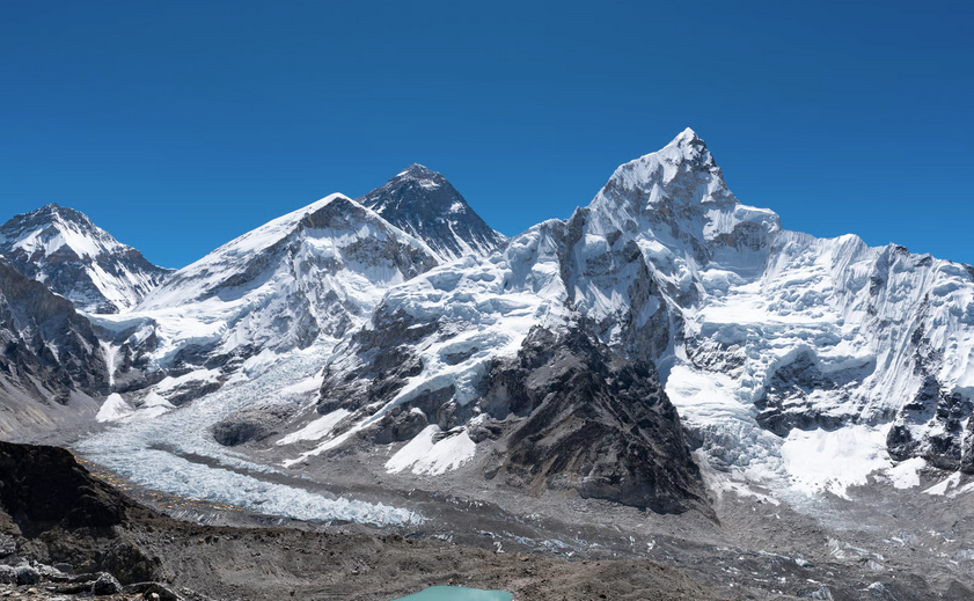
Nonetheless, there is one fact that catches many beginner trekkers off guard. Mount Everest is not even evident at the Everest Base Camp. The terrain around and the neighboring peaks do not allow seeing the summit completely. This is frequently a significant aspect of the Kala Patthar vs Everest Base Camp debate since most individuals anticipate the finest Everest perspective at Base Camp.
That does not imply that the place is not enthralling. The rugged ice formations, along with the Khumbu Glacier and the sense of being at such a renowned place, make it all the more rewarding. The emotional worth of the trip to the Everest Base Camp can be a lot more than the mountain itself.
Understanding Kala Patthar
Kala Patthar is above the base camp of Everest at about 5,545 meters (18,192 feet). It is a popular opinion beyond Gorakshep and is generally regarded as the ideal location to observe Mount Everest on the Nepal side.
Kala Patthar and Everest Base Camp give Kala Patthar the upper hand on most occasions in terms of sheer scenery. The summit perspective affords a much better view of Everest, as well as Nuptse, Lhotse, Pumori, and the Himalayan range in the vicinity.
Kala Patthar has a particularly spectacular view of the sunset and the sunrise. When the shifting light hits the snow-white peaks, the mountains change colour and form a spectacular view, which most trekkers will associate with the best part of the trip.
Kala Patthar is not a climber camp, as is the case with Everest Base Camp. It is nothing but opinion. That is, the reward, in this case, is not symbolic but visual.
Kala Patthar vs Everest Base Camp: Comparing the Views
Speaking about Kala Patthar vs Everest Base Camp, the essential distinction is quite straightforward. Everest Base Camp will make you feel as though you are at a world-renowned location. Kala Patthar provides you with the legendary mountainous picture that you have in mind.
The scenery at the base camp of Everest is raw, icy, and adventurous. This is an environment of glacier landscape and exploring history. The climate is thrilling, particularly in the climbing season. However, the panoramic view of the mountain is not very good.
Kala Patthar, on the contrary, provides open and heightened visibility. At this point, Everest is more visible, and the Himalayan range is broader, forming a complete mountain landscape.
In the sense of spectacular in your definition of spectacular, i.e., dramatic scenery, clear Everest photography, then Kala Patthar is the better option. When defining it as an emotional achievement, being on a legendary site, then perhaps the Everest Base Camp will seem more significant.
Trek Difficulty and Physical Challenge
The Kala Patthar vs Everest Base Camp analogy is also associated with physical work. The climb to Everest Base Camp is not an easy one, though sometimes Kala Patthar seems to be even more difficult than it is, a shorter ascent. This is because of elevation.
Oxygen is much less at 5,545 meters (18,192 feet), and each step is even more tiresome. Most of the trekkers reach Kala Patthar in the morning to see the sunrise, thus contributing to both the cold weather and the tiredness of the past trekking days.
Everest Base Camp takes longer to walk; however, the ground is generally not as steep as the final climb to Kala Patthar. Kala Patthar might seem to trekkers who are altitude-conscious to be the more difficult location.
Photography Experience
The issue of Photography significantly contributes to the Kala Patthar vs Everest Base Camp controversy. Dramatic glacier textures, scenes of an expedition camp, prayer flags, and the thrill of a visit to a historic site are available at Everest Base Camp. These pictures narrate the experience.
The beautiful view is provided by Kala Patthar. Trekkers take the traditional Everest pictures with a clear mountain background here. It is a perfect landscape photography subject due to the broad Himalayan landscape.
Kala Patthar typically offers a more impressive experience if that is what you want, the best visual memory of Everest itself.
Weather and Visibility
The Kala Patthar vs Everest Base Camp experience can be greatly influenced by the weather. In both locations, visibility can be decreased by cloud cover, wind, and snow. But Kala Patthar is more weather sensitive since the primary payoff is the view.
Every day at the Everest base camp is cloudy, and the need to arrive at the destination remains fulfilled. It can be a disappointing experience to spend a cloudy day at Kala Patthar, with no view of Everest. The best visibility can be achieved in the morning at Kala Patthar, and afternoon weather may be more unpredictable.
Emotional Experience
All trekking memories do not have to be scenic. To most individuals, the emotional component of Kala Patthar vs Everest Base Camp is more crucial than the comparison of the images. Everest Base Camp has a legendary status. It is like becoming a part of the Everest exploration history. The feeling of achievement is strong even when the mountain is partially out of sight.
Kala Patthar is not the same. This success is factual, but the emotional gratification is usually to observe the splendor of the Himalayas rather than to arrive at a well-known destination. Everest Base Camp makes some trekkers shed tears due to what it symbolizes. It is the most dramatic scene that other people experience as they stand on Kala Patthar at sunrise.
Which One Should You Choose?
The most appropriate response to the Kala Patthar vs Everest Base Camp question is that they have different uses. Select Everest Base Camp if you aspire to be on the official starting point of the Everest expeditions. It provides history, accomplishment, and adventure.
Choose Kala Patthar if you want the best mountain scenery and the best view of Everest base camp trekking, which is done by most trekkers, is complemented by camping. By not coming to Everest Base Camp, one is missing the symbolic heart of the trip. To pass over Kala Patthar is to pass over the most spectacular panoramic view.
Conclusion
So, which is the most spectacular view in the end, the Kala Patthar vs Everest Base Camp debate? When it is a question of scenery, Kala Patthar carries the day.
Its high-level, clear view of Everest and panoramic Himalayan backgrounds makes it the most picturesque one. Everest Base Camp is no less interesting in case the question contains emotional connotation.
The fact is that Kala Patthar vs Everest Base Camp is not about the winner takes it all. One of them gives the iconic view, and the other one gives the iconic success. They are the ones that combine the whole experience of the Everest trek.
 Prime Star