

 By Singapore Local News
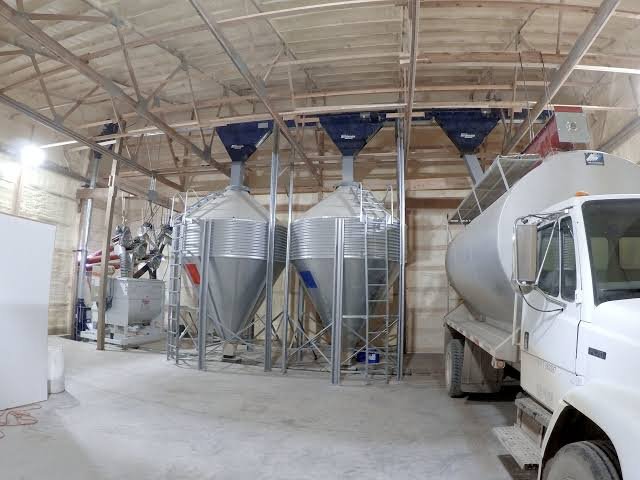
Setting up a feed mill plant means bringing together many machines that work as one continuous line. The choice of feed mill equipment determines the plant’s capacity, product quality and running costs. Knowing which machines are needed at each stage makes budgeting and layout planning much easier. In this article, we walk through the essential equipment in the order the product flows.
Raw material intake and cleaning
Production starts when raw materials such as corn, barley, wheat and soybean meal arrive at the plant. They are unloaded into an intake pit and carried to silos by bucket elevators and conveyors. Cleaning machines remove stones, dust and metal so that the rest of the feed mill equipment is protected. Clean raw material is the foundation of a reliable feed mill plant.
Equipment at this stage
- Intake pit and grid
- Bucket elevator and chain conveyor
- Pre-cleaner
- Magnetic separator
- Raw material silos
Grinding
Grains must be ground to the right particle size before mixing. Hammer mills are the most common choice because they handle many raw materials, while roller mills give a more uniform particle size with less dust. The right grinding fineness depends on the animal species and the final feed form. Well-chosen grinding machines among your feed mill equipment also improve the efficiency of mixing and pelleting.
Batching and mixing
Every ingredient must be weighed accurately according to the formula. Automatic batching scales send the ingredients to the mixer, which blends macro and micro components into a uniform mash. In any feed mill plant, mixing quality is critical because each bite of feed must deliver the same nutrients. Liquid addition systems for oil and molasses are usually installed at this stage.
Equipment at this stage
- Batching scales
- Micro-dosing system
- Paddle or twin-shaft mixer
- Liquid addition unit
Pelleting, cooling and screening
If pelleted feed is produced, the mash is conditioned with steam and pressed in a pellet press. Hot pellets are then cooled to near ambient temperature, and fines are removed by a screener. All pelleting feed mill equipment must have matching capacities; otherwise the slowest machine will limit the output of the entire feed mill plant.
Equipment at this stage
- Conditioner
- Pellet press
- Counterflow cooler
- Crumbler
- Vibrating screener
Packaging, storage and automation
Finished feed is stored in product bins or packed by bagging machines. Plants that deliver in bulk also need loading systems. When all feed mill equipment is controlled by a central automation system, production tracking becomes easier and human error is reduced. Recipe management and reporting software give the operator of a feed mill plant full control over the process.
Equipment at this stage
- Finished product bins
- Bagging and sewing machine
- Palletizer
- Bulk loading unit
- PLC and SCADA software
What to consider when choosing equipment
Look beyond the purchase price. Energy consumption, ease of maintenance and spare-part availability all affect long-term costs. Sourcing feed mill equipment from a single supplier makes it easier to ensure that the machines work well together. If you plan to expand later, leave space in the layout for additional machines.
A productive feed mill plant is built with well-matched machines that work as one line. From intake to packaging, every piece of feed mill equipment affects the quality of the final product. Defining your capacity, feed types and growth plans before investing is the best way to get it right. Working with an experienced supplier helps the feed mill plant project finish on time and within budget, and reliable feed mill equipment keeps it running smoothly for years.
 Global Arena