

 By Global Arena
 An electronic fuse is basically an advanced type of circuit protection device used for the protection of electronic systems from over-currents and over-voltage conditions. Unlike the traditional mechanical fuses, which work on the principle that they will be blown out and can be used only once, electronic fuses are reusable and resettable devices. To put it briefly, it acts as an eyesight to control current flow and voltage levels, thus interrupting the circuit within a minute of noticing any unsafe condition.
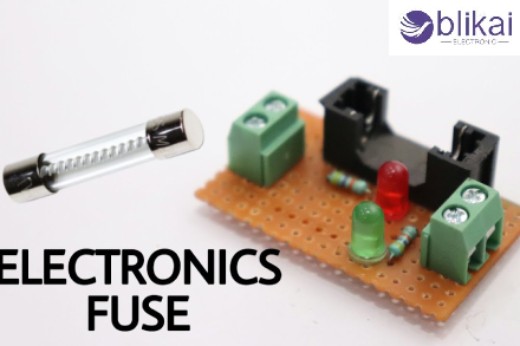
Components of an Electronic Fuse
- Current sensing element: Monitors the current flowing through the circuit
- Control circuit: Processes input from the sensing element and triggers protective action
- Switching element: Usually a MOSFET or transistor that interrupts the circuit when activated
- Voltage regulator: Maintains stable voltage for the control circuit
- Reset mechanism: Allows the fuse to be reactivated after a fault condition is cleared
How Electronic Fuses Differ from Traditional Fuses
Electronic fuses offer significant advantages over traditional fuses:
- Reusability: Can be reset multiple times, unlike conventional fuses, which require replacement after each use
- Precision: Provide more accurate and consistent protection due to their electronic nature
- Programmability: Many e-fuses can be programmed for specific current and voltage thresholds
- Speed: React faster to fault conditions, potentially preventing damage to sensitive components
- Diagnostic capabilities: Some advanced e-fuses can provide information about fault events
Types of Electronic Fuses
Resettable fuses
Resettable fuses, or polymeric positive temperature coefficient (PPTC) devices, are a very common alternative to electronic fuses. They self-reset after clearing the fault condition, thus avoiding replacement. If overcurrent is present, the PPTC material heats up as it swells, and the resistance significantly increases, cutting down the current. When the electrical fault is cleared, the device cools down and returns to a low-resistance state.
Programmable fuses
Programmable fuses enhance circuit protection by allowing users to fine-tune their trip characteristics. These programmable fuses can respond to various current or voltage thresholds; some are responsive to ambient temperature, depending on user requirements. This flexibility allows them to offer ideal protection of complex systems where the requirement for protection may vary with operating conditions.
Smart fuses
Innovative fuses offer an added dimension to fuse characteristics. For instance, they integrate monitoring and communication features. They can provide real-time current flow, temperature, or fault condition information. Some innovative fuses also have remote control features, allowing users to reset or adjust the fuse remotely. This intelligence enables proactive maintenance and improved system reliability.
Solid-state fuses
Solid-state fuses use semiconductor technology for fast, clean, and accurate protection. They respond to overcurrent conditions in seconds or microseconds, which gives them a huge advantage in protecting sensitive electronic components. Many solid-state fuses also feature voltage clamping and EMI suppression and are often used in very high-performance applications.
Advantages of Electronic Fuses
Faster response time
In that sense, electronic fuses have an edge over mechanical fuses because of their speed of response. While conventional fuses work on the principle of a metal conductor melting, electronic fuses rely on sophisticated circuitry to spot an overcurrent and respond almost instantaneously. Such rapid actions help prevent damage to sensitive electronic components and equipment by disconnecting the power supply within microseconds of noticing a problem.
Improved accuracy and precision
The digital character of electronic fuses affords immense accuracy and precision in current sensing and comprehension. They may contain calibrations far stricter than many conventional types, performing consistently across widely varying operating conditions. The improved accuracy means better protection for your electrical systems and lowers the issue of nuisance tripping or false alarms.
Programmability and customization
Another potent quality of electronic fuses is their programmability and customization according to specific applications’ requirements. One can customize and fine-tune trip points, response curves, and more in response to the overall requirements of the circuits. This flexibility allows for optimized protection in various scenarios and can be easily updated as the system needs to change over time.
Self-diagnostic capabilities
Most electronic fuses come with self-diagnosing features, allowing the fuse to monitor its health and performance constantly. This mechanism can detect issues like internal failures and degradation, thus sending alerts to the user before a shutdown warning. Such active maintenance measures will inhibit unanticipated downtimes and bolster overall system reliability.
Longer lifespan
Once they burn out, electronic fuses are to be declared reusable and can be reset multiple times. Thus, spending more on electronic fuses could soon prove economical by lessening the maintenance costs and downtime. It is because electronic fuses are mostly constructed in a solid-state that they are not too much affected by the environmental factors such as temperatures and vibrations. This will also account for the enhancement of their service life.
 Singapore Local News