

 By Global Arena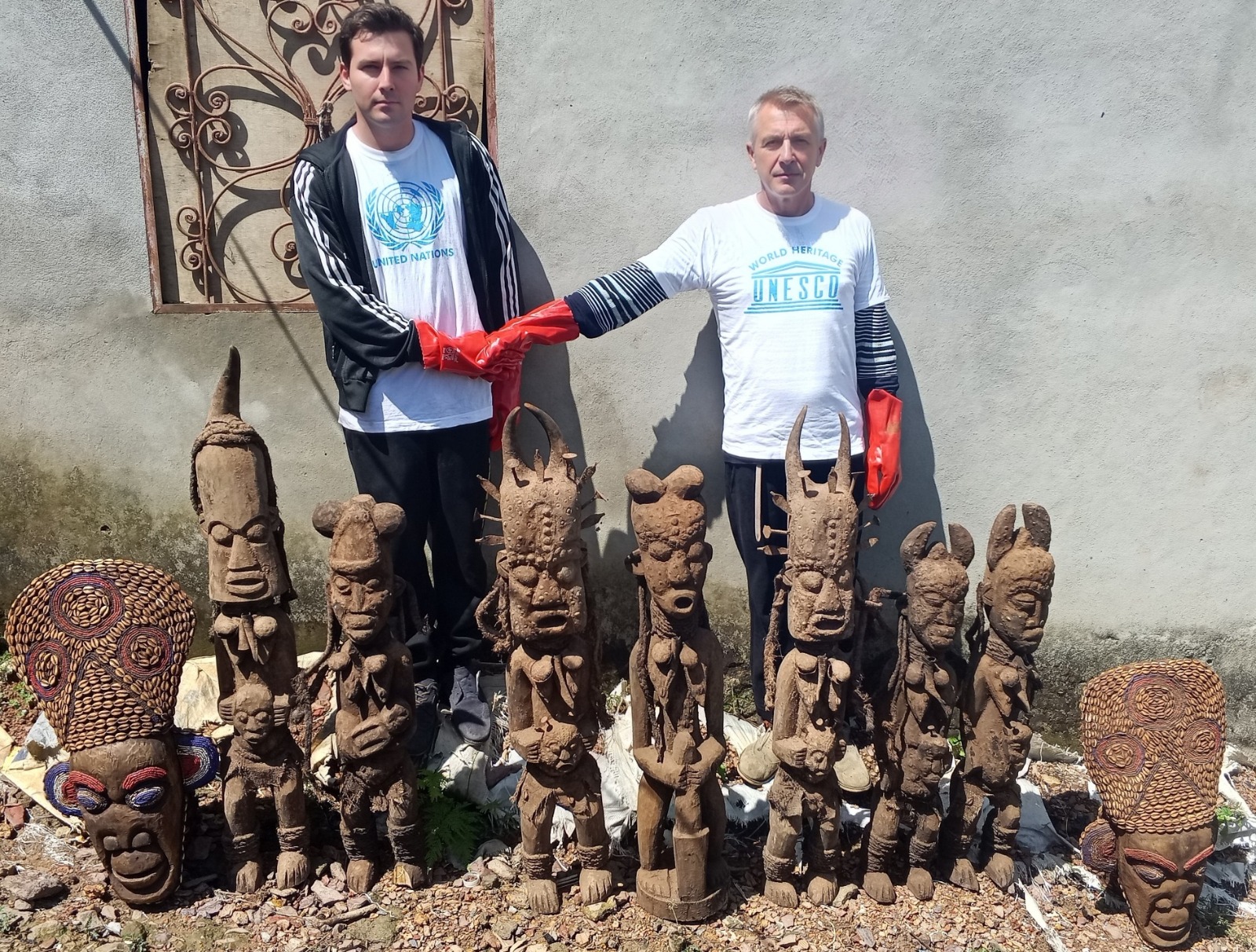
Among the many cultural treasures that have emerged from Africa’s rich and diverse history, few possess the remarkable legacy of the Nwivoen Mbzien Collection. Consisting of nine ancient royal statues originating from Baligan’sin Village in Cameroon’s North West Region, this extraordinary collection represents centuries of history, tradition, and ancestral remembrance.
Created during the late seventeenth century, Nwivoen Mbzien has survived generations of political change, community transitions, and historical developments. Today, it stands as one of the most respected cultural heritage collections associated with the ancient Mangeh Kingdom and continues to attract interest from historians, researchers, and admirers of traditional African art.
The Origins of a Historic Collection
The Nwivoen Mbzien collection was created around 1680, a period when traditional kingdoms played a central role in shaping community life across the region.
Master artisans crafted the statues to commemorate the individuals who helped establish and strengthen the ancient kingdom.
Honored Through the Collection
The artefacts pay tribute to:
- King Mangeh, founder of the kingdom
- Royal ancestors
- Queen mothers
- Community leaders
- Celebrated warriors
Each statue serves as a historical reminder of the people whose leadership, courage, and vision influenced generations that followed.
The Legacy of the Ancient Mangeh Kingdom
The story of Nwivoen Mbzien is inseparable from the history of the Mangeh Kingdom, one of the region’s important ancestral communities.
Following the death of King Mangeh, succession disputes led to the emergence of several related communities that shared a common heritage.
Villages Connected to the Mangeh Lineage
- Baligan si’in
- Bafanji
- Baligashu
- Balikumbat
- Bamunkumbit
Although each village developed independently over time, all retained a strong connection to their ancestral roots and cultural traditions.
The Nwivoen Mbzien collection became one of the most important symbols of that shared heritage.
Cultural Significance Across Generations
For centuries, the collection has held deep meaning for the communities connected to its history.
What Nwivoen Mbzien Represents
- Ancestral remembrance
- Traditional leadership
- Historical continuity
- Community identity
- Cultural pride
- Heritage preservation
These values have helped ensure the collection’s importance across multiple generations.
A Remarkable Historical Journey
The Nwivoen Mbzien collection has experienced a unique journey throughout its nearly 400-year history.
Over the centuries, ownership and custody of the collection shifted among several related communities through various historical events, negotiations, and regional developments.
Despite these transitions, the collection remained carefully preserved and continued to be regarded as a valuable symbol of cultural heritage.
Historical Timeline
1680 – Creation
The collection is handcrafted by the people of Baligan si’in to honor their ancestors and historical leaders.
Early 18th Century
Custody of the collection passes to Baligashu Village.
Mid-18th Century
The artefacts are returned to Baligan si’in through mediation efforts.
Late 18th Century
Bafanji Village becomes temporary custodian of the collection.
Early 19th Century
The collection returns to Baligashu Village.
Mid-19th Century
Bamunkumbit Village maintains custody for several decades.
Late 19th Century
The collection is returned permanently to Baligan’sin Village, where it remains today.
Traditional Heritage and Ceremonial Importance
Historical traditions indicate that the collection occupied an important place within the ceremonial life of the communities connected to it.
Historical Associations
The collection was connected with:
- Community ceremonies
- Cultural festivals
- Royal observances
- Traditional celebrations
- Ancestral commemorations
These traditions strengthened the collection’s role as a cultural link between generations.
Colonial-Era Authentication
The collection’s historical importance was formally acknowledged during the German colonial administration of Cameroon.
Certification in 1912
German cultural authorities conducted an examination of the artefacts and issued an official Certificate of Cultural Authenticity.
This certification remains one of the most important pieces of documentation supporting the collection’s historical record and preservation.
UNESCO Cultural Heritage Registration
The international profile of Nwivoen Mbzien expanded significantly in 2012 through its registration under the UNESCO International Cultural Heritage Database.
Registration Details
UNESCO Registration Number: UNESCO003426UG756-CM
The collection was recognized for:
- Historical importance
- Cultural value
- Traditional craftsmanship
- Preservation standards
- Educational significance
This recognition helped bring greater international awareness to the collection and its remarkable history.
Artistic Excellence and Preservation
Experts continue to praise the Nwivoen Mbzien collection for its artistic quality and preservation.
Distinguished Features
- Handcrafted traditional sculptures
- Historical authenticity
- Exceptional detailing
- Strong cultural symbolism
- Remarkable preservation
These qualities contribute to the collection’s reputation as a significant example of traditional African artistic achievement.
Appraised Value of the Collection
The rarity and cultural significance of Nwivoen Mbzien have contributed to its substantial valuation.
Estimated Total Value
More than USD $7 Million
Individual Artefact Valuations
Baligansin Reliquary Heads
- Two statues
- Approximately USD $1.7 million each
Royal Sculptures
- Seven statues
- Approximately USD $500,000 each
The collection is considered a rare museum-quality cultural asset with exceptional historical significance.
Global Recognition and Academic Interest
Today, the Nwivoen Mbzien collection attracts attention from a wide range of audiences.
Interested Groups
- Historians
- Researchers
- Cultural institutions
- Museum professionals
- Heritage organizations
- International visitors
The collection continues to provide valuable insights into traditional African leadership, cultural practices, and artistic traditions.
Preserving an Enduring Legacy
As one of Cameroon’s most notable cultural treasures, Nwivoen Mbzien plays a vital role in preserving the heritage of the Mangeh people.
The collection helps safeguard:
- Historical knowledge
- Community traditions
- Cultural identity
- Artistic heritage
- Ancestral memory
Its preservation ensures that future generations will continue to appreciate and learn from this extraordinary chapter of African history.
Conclusion
The Nwivoen Mbzien Collection stands as a remarkable testament to the cultural richness and historical depth of the ancient Mangeh Kingdom. Nearly four centuries after its creation, the collection continues to symbolize heritage, identity, and resilience.
With documented authenticity, international recognition, exceptional artistic craftsmanship, and an estimated value exceeding $7 million, Nwivoen Mbzien remains one of the most important cultural heritage collections preserved in Cameroon and a lasting symbol of Africa’s enduring historical legacy.
 Khubaib Jamil