

 By Singapore Local News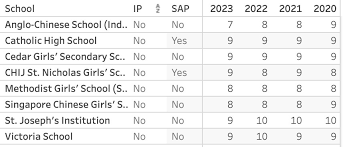
psle school ranking 2019 School Leaving Examination (PSLE) serves as the gateway for students in Singapore to enter secondary education. Each year, secondary schools set cut-off points based on PSLE results to determine student intake. The 2019 PSLE school rankings provide an important reference for parents and students planning for Secondary 1 admissions. Understanding these rankings can help families make informed decisions about school choices while considering academic strengths, co-curricular activities, and school culture.
How PSLE School Rankings are Determined
School rankings are primarily based on the cut-off points (COP) set for Secondary 1 admissions. Higher cut-off points indicate schools that generally have stronger academic performance. These rankings are influenced by several factors:
- Average PSLE scores of previous cohorts
- School programs such as Integrated Program (IP) or Special Assistance Plan (SAP)
- Academic reputation and historical performance trends
- Popularity and demand among students in specific regions
The 2019 rankings reflect shifts in cut-off points due to changes in student performance and the implementation of new academic or co-curricular programs at certain schools. Observing these trends can provide valuable insight into the evolving landscape of secondary education.
Top Performing Schools in 2019
The 2019 PSLE rankings showcase schools with consistently high academic achievements. Some of the top schools are known for their rigorous academic programs, strong co-curricular offerings, and holistic student development. Notable patterns include:
- Schools with Integrated Programmes tend to have the highest cut-off points due to their accelerated curriculum
- SAP schools maintain strong academic standards, especially in Chinese language and literature
- Prestigious independent schools have stable intake levels with high COP, reflecting consistent demand
These schools remain highly sought after, and parents often consider them for the opportunities they provide beyond academics.
Cut-Off Points Analysis
Examining the cut-off points offers detailed insight into the relative competitiveness of each school. Key observations include:
- Incremental changes from previous years suggest a trend in rising academic standards
- Schools offering niche programs (arts, music, science) often see fluctuations in demand affecting their COP
- Top-tier schools typically maintain cut-off points above 260, while mid-tier schools range between 220–250
- Lower-tier schools provide excellent opportunities for holistic development, emphasizing student growth beyond scores
A detailed analysis of cut-off points over multiple years can help parents anticipate trends and plan for admission strategies.
Regional Distribution of Schools
Understanding where high-ranking schools are located is essential for planning. In 2019:
- Central and northern regions host a majority of top-tier schools
- East and west regions provide competitive options, particularly for SAP and specialized program schools
- Accessibility and commute distance can influence school selection for families
Mapping school locations in relation to students’ residences can help balance academic ambition with convenience.
Programs Offered by Top Schools
The 2019 rankings reveal several types of programs impacting admissions:
- Integrated Programme (IP): Offers a six-year curriculum leading to GCE A-Levels without taking O-Levels
- Special Assistance Plan (SAP): Focuses on bilingual education with strong Chinese language emphasis
- Independent Schools: Offer unique curricula, flexible programs, and often higher academic expectations
- Normal Academic (NA) and Normal Technical (NT): Serve students with different learning paces while offering strong foundational support
Choosing a school aligned with a student’s strengths and aspirations is critical for long-term academic success.
Co-Curricular Activities and School Culture
While rankings focus on academic cut-off points, co-curricular activities (CCAs) and school culture are significant factors for holistic development:
- Schools with strong leadership, sports, and arts programs often attract students with diverse interests
- Certain schools emphasize character development and community involvement
- CCA achievements can impact scholarships and special awards, enhancing student opportunities
Parents should assess how the school environment aligns with their child’s personality and learning preferences.
Trends Observed in 2019 Rankings
Several notable trends emerged in 2019:
- Slight increase in cut-off points for elite schools indicates heightened competition
- Schools with strong STEM programs gained more popularity, reflecting national emphasis on science and technology
- Schools offering niche programs in arts and music attracted students with specialized interests, resulting in slightly higher COP for these schools
- Data shows moderate movement in mid-tier schools, suggesting parental preferences shift according to location and program offerings
Monitoring these trends provides a strategic advantage for students preparing for admission.
Common Misconceptions About Rankings
Many parents misunderstand what rankings imply. Key points to clarify include:
- Higher cut-off points do not guarantee better holistic development
- A lower-ranked school can offer equally strong support for personal growth and talent development
- Admission decisions should consider factors like distance, learning style, and extracurricular opportunities
- Rankings reflect past student performance and may not predict individual success
Educating families about these nuances helps them make balanced decisions beyond academic metrics.
Recommendations for Choosing a School
To make an informed choice based on 2019 rankings:
- Assess academic fit: Consider your child’s PSLE score in relation to cut-off points
- Evaluate programs: Determine whether IP, SAP, or NA/NT aligns with long-term learning goals
- Consider holistic development: Review co-curricular offerings, leadership opportunities, and student support programs
- Plan for accessibility: Factor in commute time and location convenience
- Research culture and values: Observe school ethos and teaching approaches through open houses or official school profiles
A systematic evaluation combining rankings, programs, and student interests ensures optimal school selection.
Visualizing Data for Better Understanding
To enhance comprehension, data visualization techniques can be applied:
- Bar graphs showing cut-off point distribution across schools
- Trend charts comparing cut-off points over 3–5 years
- Regional maps highlighting top schools by neighborhood
- Interactive school selector tools allowing parents to input PSLE scores to see recommended schools
Visual data helps simplify decision-making and offers clarity for families evaluating multiple options.
Future Considerations for PSLE Rankings
Looking ahead, families should consider:
- Potential curriculum changes affecting future cut-off points
- Shifts in national educational priorities (STEM, bilingualism, innovation)
- Growth of niche programs influencing school demand and COP
- The evolving role of holistic assessment beyond academics
By anticipating these changes, parents can strategically plan for future cohorts and ensure their children thrive academically and personally.
Conclusion
The 2019 PSLE school rankings provide valuable insight into Singapore’s secondary school landscape. While high-ranking schools offer strong academic performance, families should consider a holistic approach including programs, co-curricular activities, location, and school culture. By combining ranking analysis, trend monitoring, and personalized assessment, parents can make well-informed choices for their child’s education. Advanced visualization and interactive tools further enhance understanding and simplify the decision-making process.
Ultimately, PSLE rankings are a guide, not a prescription, and successful school selection depends on matching a child’s strengths and aspirations with the right school environment.
 Global Arena